
Let's talk about sexual aversion
It's not the same as low libido. It's not "I'm tired." Sexual aversion is your nervous system saying "stop, this doesn't feel safe." Your body might freeze. Your skin might crawl. The thought of being touched in that way can trigger panic, anger, or total shutdown. And here's what matters: it's treatable. Not by forcing yourself through it. By rebuilding trust with your own body first.
That's where lemon vibrators come in. Not as a replacement for couples therapy or individual counseling, but as a tool for reclaiming your pleasure on your own terms, at your own pace.
Why touch from a partner feels threatening (even when they're kind)
Sexual aversion usually has roots. Sometimes it's past trauma or abuse. Sometimes it's years of mismatched desire in a relationship where you've learned to associate sex with obligation, pressure, or disconnection. Sometimes it's a combination: a partner who means well but touches you in a way that triggers your nervous system, even if they don't mean to.
Here's what I've observed in my practice: the body doesn't distinguish between "he meant well" and "that triggered me." Your nervous system doesn't care about intent. It cares about safety. And when someone else's hands are involved, you've lost agency. They control the pace, the pressure, the timing. That loss of control is often exactly what fuels aversion in the first place.
The role of solo pleasure in healing
This might sound counterintuitive. If sex feels scary, why add a sex toy? But solo pleasure is fundamentally different from partner sex. You control everything. Speed, intensity, pressure, when you stop, when you rest. You're building a new neural pathway: pleasure is safe because I'm in charge.
For people with sexual aversion, this distinction is clinical gold. When you can generate arousal and orgasm on your own terms, something shifts. You're not waiting for your partner to "do it right." You're not negotiating your own pleasure. You're not asking for permission. You're simply... taking it.
That agency matters more than the orgasm itself.
Why lemon clitoral vibrators specifically
Lemon vibrators like the Lem use suction stimulation rather than direct vibration. That matters for people with aversion because the sensation is less invasive. You're not being penetrated. No pressure on sensitive internal tissue. Just focused, controllable stimulation on the external clitoris.
The intensity is also easier to modulate. If you're starting from scratch with pleasure, you don't want overwhelming sensation. You want to build slowly, notice what feels good, what feels safe, what actually turns you on. A lemon clitoral vibrator lets you stay in patterns 1 or 2 for as long as you need.
There's also something psychological about the design. Lemon adult toys from Get Lem Sucker are sleek, modern, not aggressively "sexual." For people who've had their sexuality weaponized or shamed, that matters. It's a tool for pleasure, not a reminder of trauma or pressure.
Starting from zero: the first steps
If sexual aversion is fresh or severe, start with exploration, not orgasm. Use a lemon vibrator on low to simply notice sensation. What patterns feel interesting? What makes you curious? What makes you want to pull away? You're not trying to climax. You're mapping your own body.
This takes time. Weeks, sometimes months. That's not slow. That's exactly right.
Here's what I recommend:
-
Choose a time when you're alone and won't be interrupted. No anxiety about a partner coming home. No pressure. Just you.
-
No goal beyond sensation. Not orgasm. Not "getting there." Just noticing what feels okay. If it doesn't, that's data, not failure.
-
Pair it with things that help you feel safe. Music, lighting, a specific room. Anything that signals to your nervous system: this is for me.
-
Start with external stimulation only. No penetration, no insertion. A lemon clitoral vibrator lets you focus on one area, one sensation.
Because you're controlling everything, including the power to stop instantly, your nervous system learns that pleasure doesn't mean loss of control. That's the beginning of healing.
When pleasure returns, what comes next
Some people find that solo pleasure alone is enough. They reconnect with their body, their desire, their orgasm. They feel liberated. They don't necessarily want partner sex, and that's completely valid.
Others find that as solo pleasure becomes normal and safe, curiosity about their partner grows. Not obligation. Curiosity. "I feel pleasure now. I wonder what that might look like with them."
If you're in a relationship and heading in that direction, the conversation is everything. Not "I want to have sex again," but "I've been rebuilding my relationship with my own pleasure. I'm learning what actually feels good to me. I'd like to move slowly with you, with communication at every step." That's not about performance. That's about trust.
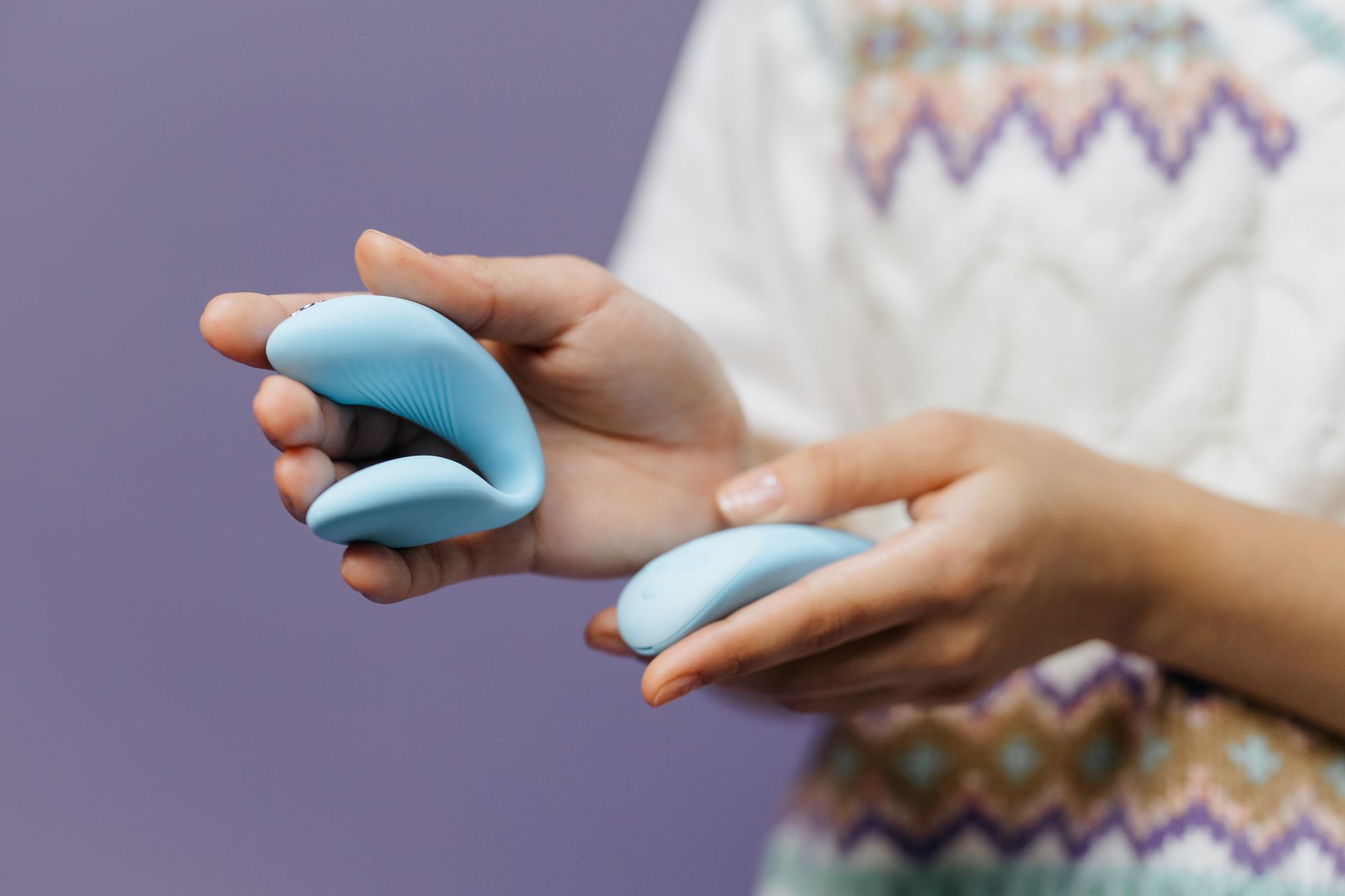
Photo by cottonbro studio on Pexels
The nervous system piece (this is the real work)
Sexual aversion isn't about willpower. It's about your nervous system being stuck in a threat response. Therapy helps rewire that. Individual counseling, somatic work, sometimes medication if anxiety is severe. But therapy alone often stalls on one point: the moment of actual pleasure or touch, your body still tenses.
That's where lemon sexual toys become part of the solution, not a substitute for it. You're using your own hands and your own device to slowly prove to your nervous system that pleasure is safe. That builds faster than talking about it.
Couples therapy without solo pleasure work can feel like asking someone to trust the ocean while they're still afraid of water. Lemon clitoral vibrators let you wade in alone first.
What if penetration was the triggering part
Many people with sexual aversion find that penetration is specifically what caused the shutdown. Maybe a partner pushed. Maybe it was always painful. Maybe there's older trauma tangled up in it. For these people, learning pleasure through external stimulation alone can be revelatory.
You discover that you don't need penetration to feel aroused, satisfied, or orgasmic. That realization is transformative. It removes a huge pressure point from any future partner relationship.
If and when you decide to explore penetration again with a partner, you're doing it from a place of "I want to" not "I should." That shifts everything.
The timeline is yours
I want to be clear about one thing: rebuilding after sexual aversion doesn't have a deadline. Some people move from aversion to desire in six months. Some take years. Both are normal. And "I'm not interested in partner sex" is also a completely valid destination.
The goal isn't to return to the sex life you had. It's to reclaim agency over your own body. Sometimes that leads to passionate partner sex. Sometimes it leads to a fulfilling solo pleasure practice. Sometimes it leads to a relationship where you and your partner redefine intimacy entirely.
All of those are wins.
When to get professional support
If aversion is tied to trauma, individual therapy with someone trained in trauma (EMDR, somatic experiencing, or other evidence-based approaches) makes a real difference. If your relationship is strained, couples therapy helps both of you understand what happened and how to rebuild trust.
Lemon vibrators are a tool, not a cure. But they're a tool that puts you back in control of your own pleasure. And for many people, that's where healing begins.
FAQs
Can a lemon clitoral vibrator help if I have PTSD related to sex?
Yes, often. Because you control everything, including the power to stop instantly, lemon vibrators can help your nervous system learn that pleasure doesn't require vulnerability to someone else. Pair it with trauma-informed therapy for best results. A trauma specialist can help you navigate triggers while you explore solo pleasure.
What if I still feel guilty using a toy when my partner wants couple's sex?
That guilt is worth examining. Are you saying "I'm not ready for partner sex yet," or are you saying "I owe my partner sex and I'm trying to fast-track myself"? The first is healthy boundary-setting. The second is pressure you don't deserve. If your partner is pressuring you into sexual activity before you're ready, that's a relationship problem, not a toy problem. Consider talking to a therapist about this dynamic.
How long does it take before I'm ready for partner sex again?
It varies wildly. Some people reconnect with desire in weeks. Others take years. Neither is wrong. The timeline belongs to your nervous system, not your partner's schedule. Rushing it usually means aversion comes back.
Should my partner know I'm using a lemon vibrator during this process?
That's your call. Some couples find it helpful to be transparent. Others need privacy during this healing phase. What matters is that you're not hiding it out of shame. You're being intentional about your own recovery. If you do share, frame it as "This is part of my healing" not "This is because you're not enough."
Can lemon vibrators replace couples therapy?
No. They're a powerful complement, but not a replacement. If your aversion is rooted in relationship dynamics, unresolved conflict, or trust issues, therapy helps address the root. Solo pleasure helps you rebuild your own baseline. Both matter.
What if I use a lemon vibrator and still feel nothing?
Nothing is still data. Your nervous system might not be ready yet. That's not failure. Keep showing up, keep exploring, and consider whether you need additional support (therapy, medical evaluation for hormonal factors, etc.). Pleasure is often the last thing to return after aversion. Patience is the skill here.
The bottom line
Sexual aversion tells you something important: your body needs to feel safe. Lemon clitoral vibrators let you rebuild that sense of safety alone, on your terms, at your pace. From there, desire can return. Partnership can be renegotiated. And your pleasure becomes something you reclaim, not something you owe.
That's not just about sex. That's about your autonomy. And your autonomy matters more than any orgasm ever could.
If you're working through aversion and want to talk through your next steps with someone trained in this work, reach out to us. We're here to help.