Here's what I hear all the time
You've tried a vibrator. Maybe it was someone else's recommendation. Maybe you were hopeful. And then it happened: the sensation felt wrong. Too buzzy. Too intense. Like someone pressed a jackhammer against the most sensitive part of your body. So you put it away and figured toys just weren't for you.
That's the lie your nervous system told you, and it's preventing you from discovering what actually works.
Why standard vibrators feel overwhelming
Most mass-market vibrators are designed around one principle: more vibration equals more stimulation. They operate at 50-150 Hz with a rigid, one-note pattern. If you've got sensitive tissues, nerve endings that respond quickly, or a nervous system that's wired to feel intensity more acutely, that relentless buzzing isn't pleasure. It's overstimulation.
Here's the distinction that changes everything: there's a difference between sensitive tissues and sensitive nerve endings. Some people have tissues that bruise easily or feel tender (common after surgery, with certain hormonal shifts, or just genetic variation). Others have incredibly responsive nerve endings that build sensation faster than their brain can process it. Both conditions make standard vibrators feel awful. And both respond dramatically to different stimulation patterns.
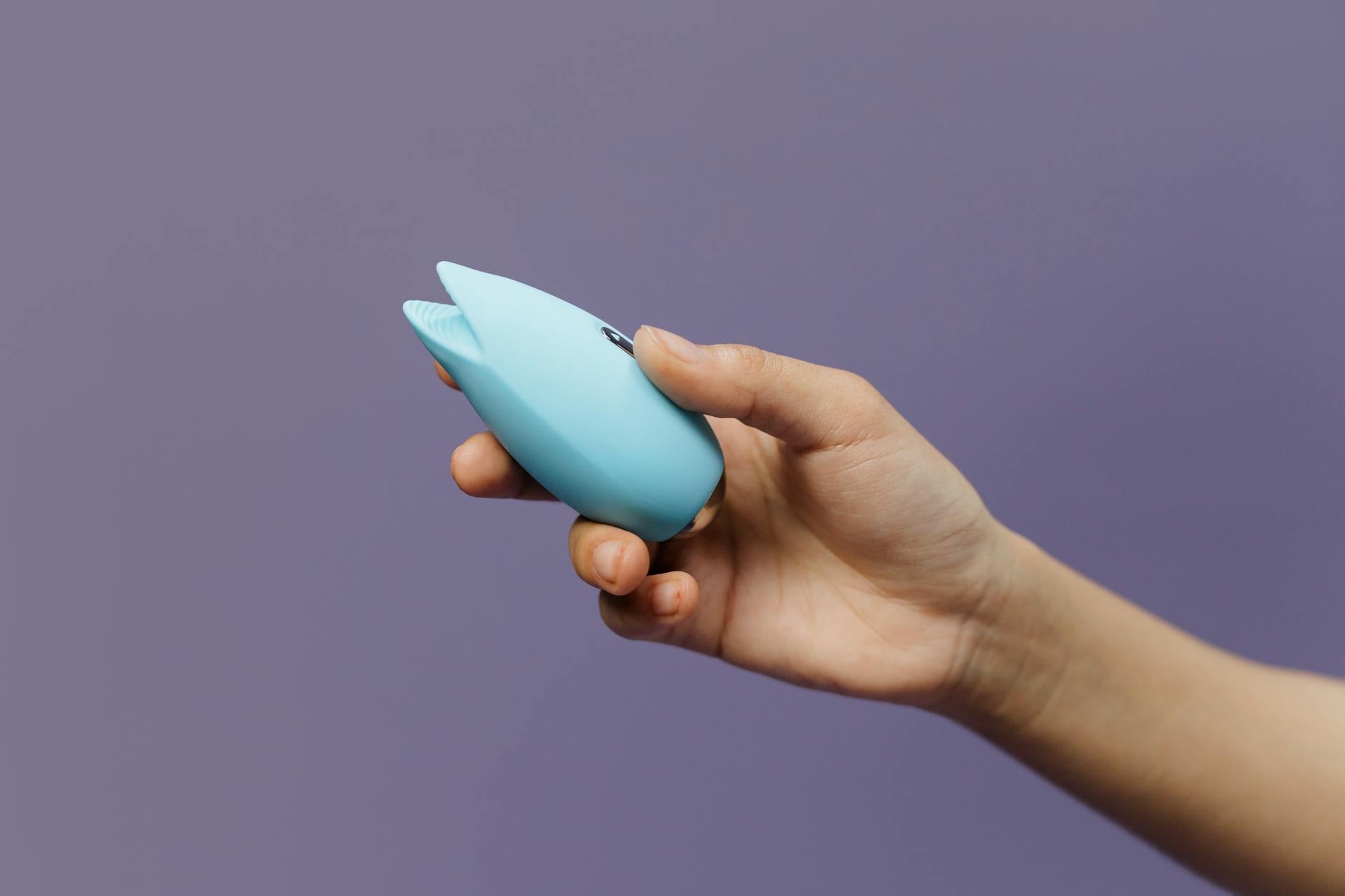
Lemon clitoral vibrators work differently. Instead of sustained buzzing, they use gentle suction combined with soft pulsing patterns. That's not a gimmick. That's a fundamental shift in how stimulation reaches your nerves, and for sensitive bodies, it changes everything.
What lemon vibrators actually do for sensitive users
A lemon vibrator operates through air-pulse technology rather than direct vibration. Think of it like the difference between a constant high-frequency buzz and a rhythmic wave. The suction gently engages tissue without the kind of mechanical friction that overwhelms sensitive areas.
Three things happen when you use a lemon vibrator at lower intensities:
1. Pattern variety. Most lemon vibrators have 8-12 distinct patterns, not just one brutal setting. You can start at pattern 1 or 2 (which feels like a slow, gentle pulse) and work up to 6 or 7. That control means you're never forced into overstimulation.
2. Distributed sensation. Because the contact is suction-based rather than point pressure, the stimulation spreads across a wider area. This feels gentler on sensitive tissues and gives your nervous system time to process what's happening.
3. Reduced friction. With standard vibrators, even with lube, there's ongoing mechanical friction. Lemon vibrators eliminate that. The suction cups seal around tissue, and the pulsing happens within that seal. No scraping, no constant sliding. Just rhythmic pressure.
The sensitivity spectrum and what actually helps
I work with a lot of people who swear they're "too sensitive." What I've learned is there are really four distinct experiences people call by that name.
Easily irritated tissues: If you experience tenderness, redness, or soreness after sex or toy use, your tissues are responding to physical friction. Solution: start with a lemon vibrator at pattern 1-2, use water-based lubricant, and keep sessions under 10 minutes until your tissues adapt. Many sensitive users find they can build tolerance gradually.
Rapid arousal buildup: Your body responds so fast that standard vibrations feel like they're jumping from 0 to 100 in seconds. Solution: longer warm-up before any toy, and start at a lower pattern. Because lemon vibrators offer more gradual intensity ramps, you can pace yourself.
Nerve overload: The sensation itself feels almost painful, even at low intensities on other toys. This often relates to pelvic floor tension or central sensitization. Solution: work with a pelvic floor physical therapist alongside toy exploration. In the meantime, lemon vibrators' gentler patterns might be tolerable where others aren't.
Touch aversion from trauma or anxiety: Physical sensation triggers your threat response. Solution: this requires slower consent-based exploration, often with a partner you've rebuilt trust with or with therapeutic support. Toys are secondary here.
Most people with genital sensitivity fall into the first two categories, and both respond really well to lemon vibrators.
Practical setup for sensitive users
If you're going to try a lemon vibrator and you know standard ones have felt terrible, here's how to set yourself up for success.
Start with the right toy. Not all lemon vibrators are created equal. The Lem by Get Lem Sucker has a particularly gentle suction range and starts at a very subtle intensity. That matters if you're sensitive.
Use lubricant every single time. Even though lemon vibrators reduce friction, water-based lubricant adds a buffer layer that makes everything feel softer. Apply generously, especially if your tissues run dry.
Begin at the lowest pattern. Pattern 1 should feel almost delicate. If it still feels intense, step back and do more warm-up. Arousal literally changes tissue thickness and nerve responsiveness. More arousal means more tolerance.
Keep your first session short. Ten minutes, maybe 15. Your body is learning that vibration can feel good, not overwhelming. Rushing to longer sessions defeats that learning.
Pay attention to your pelvic floor. A lot of sensitivity actually comes from pelvic floor tension. Before using a toy, do 30 seconds of pelvic floor relaxation: breathe in for 4, relax your pelvic floor muscles fully (imagine a full exhale happening in your whole pelvis), breathe out for 4. Repeat 5 times. Then try the toy. The difference is often noticeable.
When sensitivity is worth investigating further
If every toy, every touch, every physical stimulus to your genitals feels painful or overwhelming, there's something specific happening that deserves proper assessment. This might be vulvodynia, vaginismus, pelvic floor dysfunction, or something else entirely. A pelvic floor physical therapist can usually identify this in one or two sessions.
Medication side effects can also flatten sensation or amplify sensitivity. Some antidepressants and birth control methods shift how easily you're aroused or how intense sensations feel. That's not broken. It's a data point worth discussing with your provider.
The point: if lemon vibrators still feel overwhelming after you've tried the right patterns and setup, that's useful information to bring to a specialist. You're not too sensitive. You might have a specific condition that deserves support.
The permission piece
Honestly, sensitivity is often wrapped up in a bigger story. You might have grown up with the idea that your body's responses are too much, too fast, too loud, too needy. That message gets internalized. And then when a vibrator feels intense, it confirms a story you've believed for years: you're just not built for pleasure.
That's not true. You're built for pleasure in a different way than someone whose nervous system processes sensation differently. That's not worse. It's not a flaw. It's variation.
Lemon vibrators exist partly because clitoral sensation is wildly varied across bodies, and a one-size-fits-all approach to stimulation doesn't work. Knowing you're sensitive and choosing a tool designed for sensitivity is smart. It's not settling. It's actually respecting how your body works.
People also ask
Why do lemon vibrators feel less intense than regular vibrators? Lemon vibrators use suction and pulsing patterns instead of constant high-frequency vibration. That's a gentler delivery of stimulation. The suction also distributes sensation across a wider area instead of concentrating it at one point, which many sensitive people experience as less overwhelming. You also control the intensity level, so you're never forced into a setting that's too much.
Can I use a lemon vibrator if I have vulvodynia or chronic pain? Maybe, and a pelvic floor physical therapist is the person to check with first. Some people with vulvodynia find gentle lemon vibrators manageable, especially at the lowest patterns. Others find that any vibration irritates tissue further. You need professional guidance before exploring, not a guess from the internet.
Is my sensitivity permanent, or will I get used to vibration over time? Usually, both. Some people's nervous systems remain sensitive forever, and that's fine. You don't need to "build tolerance" if a gentler approach works. That said, many people do find that regular, careful exploration of sensation gradually shifts how their body responds. Think of it like starting a new exercise. Your muscles adapt. Your nervous system adapts too.
What's the difference between a lemon vibrator and a wand vibrator for sensitive people? Wand vibrators are broader but usually offer fewer pattern options and can't dial intensity down as low as lemon vibrators. Some sensitive users prefer wands because the stimulation spreads over more area. Others find lemon vibrators' suction mechanism works better. The only way to know is to try, so start with whatever you can access most easily.
Should I try a lemon vibrator before seeing a specialist about sensitivity? If standard vibrators have felt bad, yes. A lemon vibrator is gentler enough that it's a reasonable first experiment. But if even the lowest pattern of a lemon vibrator feels painful, or if sensitivity extends to non-sexual touch as well, that's when you want professional input. Sensitivity is information. Listen to it.
Can my partner help me use a lemon vibrator if I'm sensitive? Absolutely. In fact, having a partner control intensity and pattern can feel safer and less overwhelming than controlling it yourself. The key is communication. Tell your partner exactly what sensations feel good and which feel too much. If you're working through sensitivity together, start with longer warm-up and keep the first few sessions very brief. Let your body build trust in the experience.
You're not too sensitive. You just haven't found the right approach yet.
Sensitivity isn't a character flaw or a sexual limitation. It's a feature of your nervous system. The right tool, the right pattern, and the right pace change everything. Lemon vibrators exist because bodies like yours deserve pleasure too. Your sensitivity isn't keeping you from that. A mismatched tool was.
Ready to explore? Start slow. Be patient with yourself. And if you hit friction, reach out to us. We're here to help you figure out what actually works.