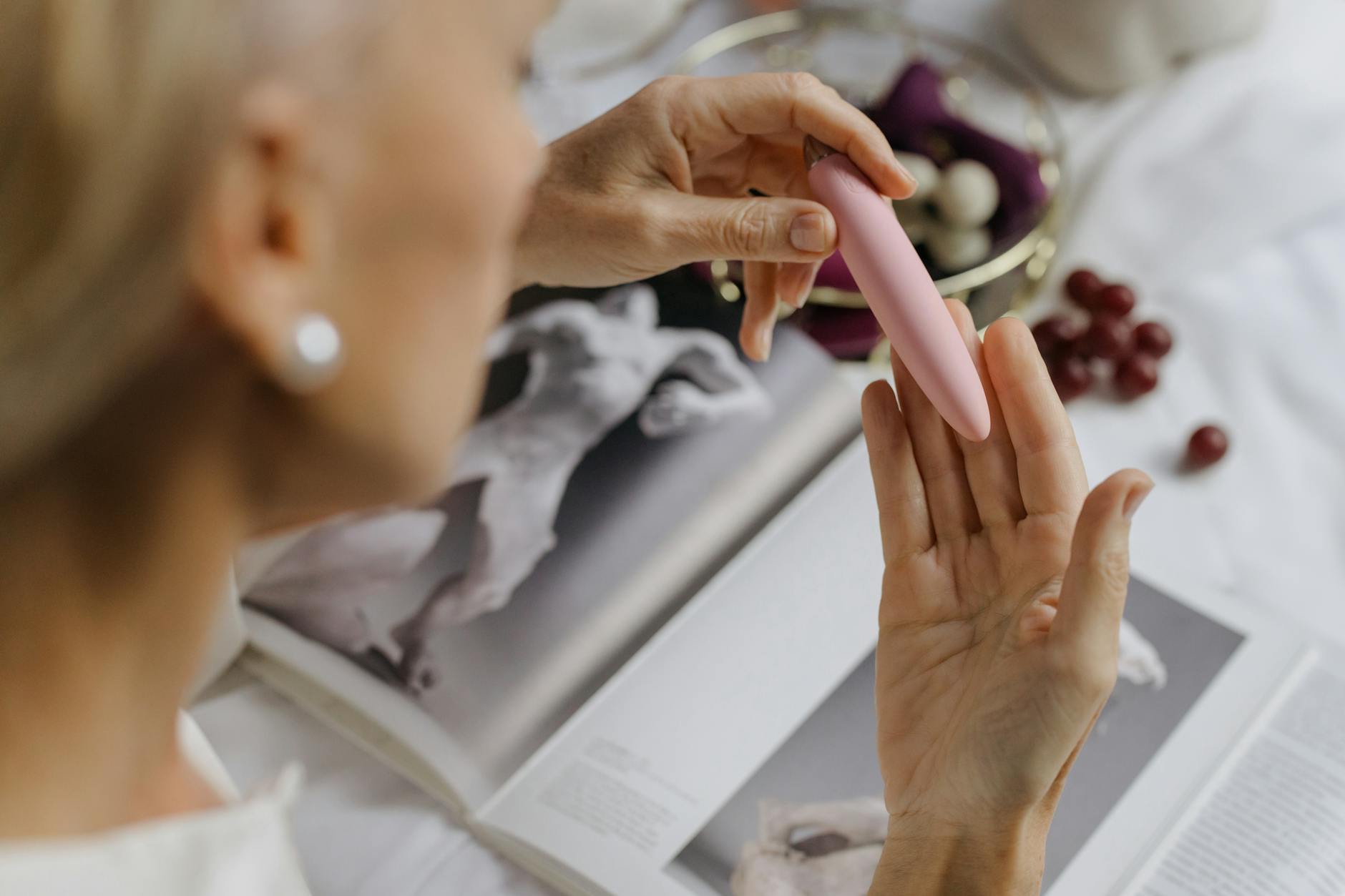
Here's what nobody tells you about pleasure after trauma
Let's be real. After sexual trauma, the idea of touching yourself again can feel like standing at the edge of something you're terrified to fall into. Your body doesn't feel like yours. Your nervous system learned to protect you by shutting down. Sensation feels dangerous. And the thought of using anything on your body, even something designed for pleasure, can trigger a flood of panic.
But here's the thing: reclaiming pleasure is possible. It's not about forcing yourself to feel good. It's about slowly, methodically rebuilding trust with your own body. And for many people, lemon vibrators and other air-suction clitoral devices become an unexpected tool in that process.
I've worked with clients through trauma recovery for years. The pattern I see is this. When people start with toys designed for gentle stimulation and zero penetration pressure, something shifts. The body learns it can say no. The mind learns it's in control. Pleasure stops feeling like it's happening to you and starts feeling like something you're choosing.
Why lemon vibrators are different for trauma recovery
Most vibrators work through direct friction or buzzing. If you've experienced sexual trauma, direct pressure can feel invasive or triggering. Air-suction technology, which lemon vibrators use, stimulates through gentle suction and pulsing patterns rather than aggressive vibration.
Three things matter here.
No penetration required. You're entirely in control of what touches your body and how. Many trauma survivors avoid toys because they're associated with penetration, which can feel triggering or unsafe. A lemon clitoral vibrator sits on the external clitoris only. The device never enters you. That boundary is crucial.
Adjustable intensity. Lemon vibrators start at very low intensities and build up. You're never caught off guard by sensation. You choose when to increase, decrease, or stop entirely. That control is rebuilding.
Predictable sensation. Unlike hands or fingers, which can be unpredictable when you're in a hypervigilant state, a toy delivers the same pattern every time. Your nervous system can relax into that predictability. Trauma hijacks your ability to predict safety. A tool that's consistent helps your brain trust again.
The neuroscience behind why this works
When you've experienced sexual trauma, your nervous system exists in a state of defensive heightened alert. Your amygdala, the brain's threat detector, has been trained to perceive touch as dangerous. Pleasure and arousal pathways get blocked because they feel synonymous with harm.
What happens when you use a lemon vibrator at low intensity in a safe environment, entirely by choice, is gradual nervous system recalibration. You're teaching your brain that touch can be chosen, stopped, controlled, and pleasurable without threat. That's not just sensation. That's rewriting neurobiology.
Each time you use a toy and nothing bad happens, your threat detector quiets down a fraction. Each time you have control, your sense of agency strengthens. It's not rapid. It's not linear. But it's real.
Starting with the body you have now
Trauma changes your body's responsiveness. Hypervigilance suppresses arousal. Dissociation numbs sensation. Many survivors report feeling completely numb to touch, even years later. That's not broken. That's a protective response that worked.
When starting with a lemon vibrator, expect to feel very little at first. That's normal and it's okay.
Set realistic expectations. You're not trying to have an orgasm. You're not trying to feel intensely. You're trying to reconnect with sensation without fear. That might mean you use the toy for five minutes, feel minimal pleasure, and that's a win. It is.
Start at the lowest setting. Most lemon vibrators have 8-12 intensity levels. Begin at level 1 or 2. You're not trying to maximize sensation. You're trying to remain calm. If level 1 feels like too much, try wearing light clothing over your underwear. The fabric softens the sensation. You control the intensity.
Keep a time boundary. Use it for a set amount of time, maybe 3-5 minutes, then stop. This trains your brain that you're in control of when the experience begins and ends. That boundary is part of the healing.
Expect numbness. You might feel almost nothing. That's the dissociation and hypervigilance doing their job. Don't interpret it as failure. You're gradually teaching your body it's safe. Sensation will return as your nervous system settles.
The role of your environment and mindset
Using a toy after trauma isn't just about the toy. Your environment matters as much as the device.
Your space should feel completely safe and private. No interruptions, no uncertainty about being discovered. Lock the door. Put your phone on silent. Create the physical conditions where your nervous system can actually relax.
Your mindset matters too. If you approach this as performance, as proving you're healed, as forcing pleasure, it will backfire. Your nervous system will sense the pressure and shut down further. Instead, approach it as exploration. Curiosity. No expectations. The goal is to practice choosing to touch yourself in a way that feels neutral or slightly pleasant. That's enough.
Many trauma survivors benefit from therapy or somatic work alongside using tools like lemon vibrators. A trained therapist who specializes in trauma can help you process what comes up and guide nervous system healing. The toy is a tool. Professional support is the container that makes it safe.
How this fits into a larger recovery arc
Reclaiming pleasure after trauma typically moves in stages. First is safety. Can your body believe it's safe? Second is sensation. Can you feel without shutting down? Third is response. Can arousal begin building again? Fourth is integration. Can pleasure exist as part of who you are without triggering fear?
Lemon vibrators typically help in stages two and three. They're tools for rebuilding sensation and learning that your body can respond without threat. But they're not the whole picture.
If you're working with a partner, communication becomes critical. Your partner needs to understand that your recovery isn't about them. It's not a reflection on desire or attraction. It's nervous system recalibration. Exploring solo pleasure, including with toys, is part of rebuilding your own internal sense of safety before intimacy with someone else becomes possible again.
Some people find that solo exploration with a device like a lemon vibrator helps them understand what pleasure actually feels like when it's untethered from performance or someone else's needs. That knowledge is powerful when you eventually rebuild partnered intimacy.
When to consider professional support
If you're experiencing active PTSD symptoms triggered by using any toy, or if numbness persists beyond a few weeks of gentle exploration, reach out to a trauma-informed therapist. They can help. Sexual trauma has deep roots, and while tools like lemon clitoral vibrators can be part of healing, they work best alongside skilled professional guidance.
You deserve pleasure that feels safe. You deserve to rebuild confidence in your own body. That process is slow and non-linear and absolutely worth the time it takes.
Frequently asked questions
Can using a lemon vibrator re-traumatize me?
It's possible if you push too fast or if the experience feels invasive. That's why starting at the lowest intensity, in a completely safe environment, with full permission to stop anytime, matters. Your body will tell you what it needs. Listen.
What if I feel nothing when using a lemon vibrator?
Numbness is a normal trauma response. It doesn't mean the tool won't help. Continued gentle use, combined with therapy, helps the nervous system gradually reawaken sensation. Patience is doing the work here.
Should I tell my partner I'm using a toy for healing?
That depends on your relationship and trust level. Some people benefit from transparency. Others need this exploration to be private. Do what protects your sense of safety first. Communication comes after you feel ready.
How long until I feel pleasure again?
It varies widely. Some people notice shifts in weeks. Others take months or years. Trauma recovery isn't linear. You might have a week of increased sensation followed by a week of total numbness. That's normal. Keep going.
**Can a lemon vibrator help me with partnered intimacy?
Yes, indirectly. When you rebuild solo pleasure and confidence in your body, you have more to bring to partnership. You know what feels good. You know you can set boundaries. You've practiced choosing. That translates into more honest, authentic partnered experiences.
Is there anything I should avoid when using toys after trauma?
Avoid pressure to perform or feel a certain way. Avoid forcing intensity. Avoid using a toy when you're in active distress or dissociating heavily. Avoid anything that doesn't feel chosen. If something doesn't feel right, stop. Your instincts are protecting you.
You're rebuilding, not starting over
Trauma doesn't erase your capacity for pleasure. It doesn't define your sexuality. It changes how your nervous system responds to touch temporarily. But temporary can be rewired. Your body can learn safety again. Lemon vibrators, used gently and deliberately, help that learning happen. Start where you are. Move at your pace. Your pleasure matters.