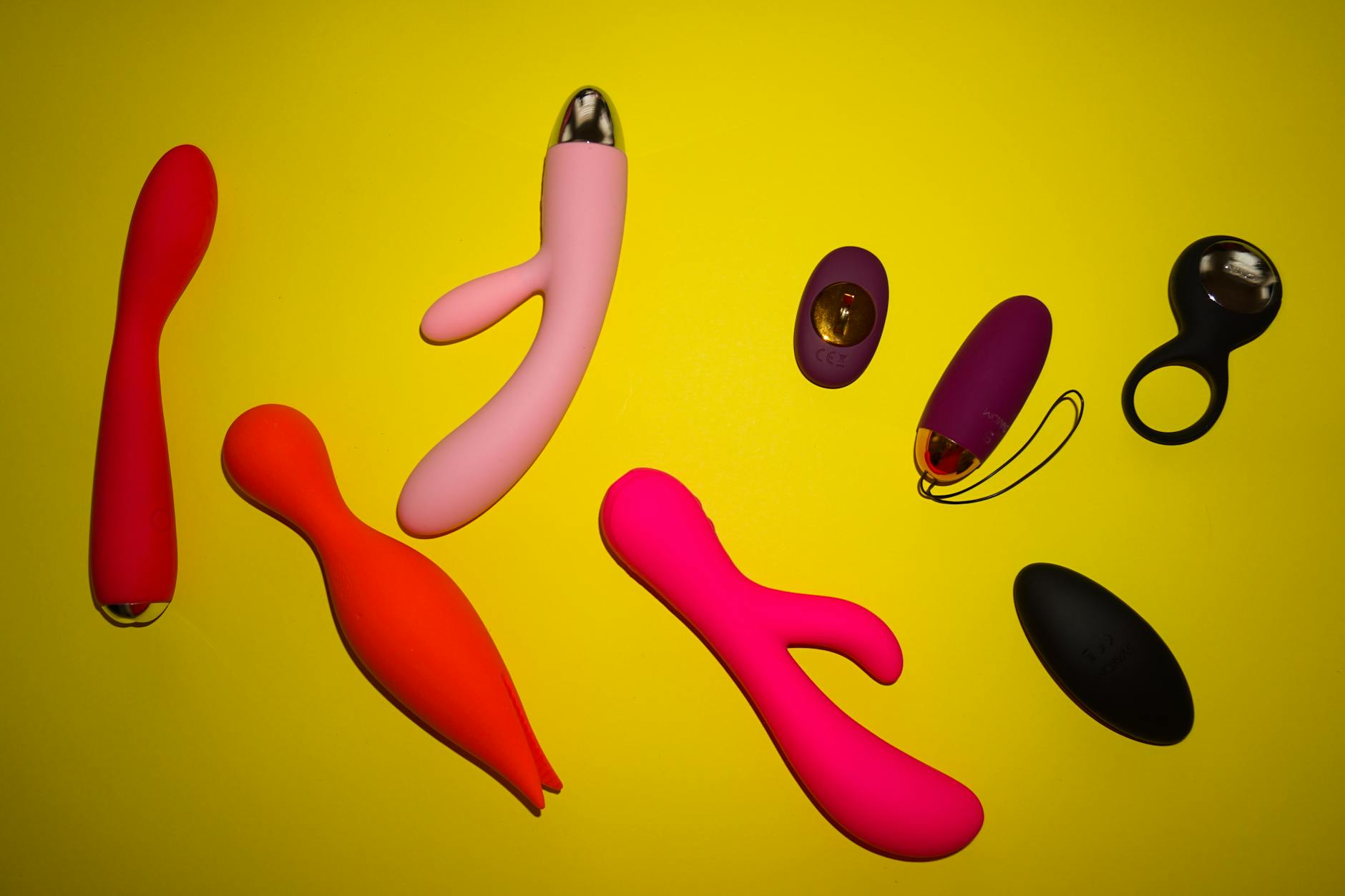
Here's the thing about hormonal birth control and pleasure
Hormonal birth control is incredible. It gives you control over your body and your timing. It also quietly rewires how your nervous system responds to touch, how quickly you get aroused, and how your lemon vibrator feels against your skin. Most people never connect the dots between their birth control and their pleasure because nobody talks about it.
Let's talk about it now.
What hormonal birth control actually does to arousal
Combination birth control pills contain synthetic estrogen and progestin. These don't just prevent pregnancy. They suppress your natural hormonal cycle, which means the dopamine and testosterone surges that fuel desire get dampened. You lose the monthly peak of wanting that typically happens around ovulation.
Some people don't notice a thing. Others find that their desire flatlines, or that getting aroused takes longer and feels more effortful. The research backs this up: about 30 percent of people on hormonal contraception report decreased libido. Another chunk reports no change in desire but a shift in how sensation feels.
For lemon vibrators and other clitoral toys, this translates into one core difference: what worked at pattern 4 last month might feel too intense this month, or not quite intense enough, or just weirdly numb.
Why sensitivity shifts on the pill
Three mechanisms at work here.
First, hormonal birth control lowers free testosterone in your bloodstream. Testosterone isn't just a male hormone. It's a major player in sexual desire and sensitivity across all bodies. When it drops, nerve endings become less responsive to stimulation. That tingle you felt before taking the pill might become a dull buzz.
Second, synthetic hormones change blood flow to genital tissue. More specifically, they can reduce engorgement. Your clitoris swells slightly when you're aroused, which amplifies sensation. On hormonal contraception, that engorgement might be less pronounced, so a lemon vibrator needs to work a little harder to create the same feeling.
Third, hormone fluctuations affect your cervix and vaginal tissue. The pill keeps these tissues in a consistent state rather than cycling through thick and thin mucus, firmness and softness. This steadiness is one reason the pill is so effective for pregnancy prevention. It also means your body doesn't get those texture-variation signals that can heighten arousal over a month.
How this changes your lemon vibrator experience
Most directly: you might need more time to warm up.
If you were used to hitting a lemon clitoral vibrator at pattern 3 and getting there in five minutes, you might now need to start at pattern 2, spend 10 minutes on it, or switch to pattern 4 for the final push. None of these are problems. They're just information about how your body has shifted.
Second, the quality of orgasm might feel different. Before the pill, maybe you had full-body waves. On hormonal birth control, you might have more localized, clitoral orgasms. Again, not worse. Anatomically different. The pelvic floor still contracts. The pleasure is still real. It's just a different flavor.
Third, you might experience numbness or a muted feeling even during peak arousal. This is the most frustrating shift because it feels like something is broken, when actually your nervous system is just operating in a different register. A lemon sucker-style vibrator, which uses pulsing suction rather than pure vibration, can sometimes feel more effective here because the sensation is broader and less likely to register as numb.
Strategic adjustments that actually help
Don't just accept the shift. Work with it.
Adjust your warm-up ritual. If you used to spend three minutes on foreplay, spend seven. If you usually went solo, bring a partner into the process. The extended warm-up isn't about compensation. It's about rebuilding the arousal scaffolding that hormonal birth control has subtly altered.
Track your pill cycle. Your pill likely has a placebo week where you bleed. Many people find that sensitivity and desire bounce back slightly during that week because hormone levels drop. If you notice a pattern, you can time solo exploration for that window.
Experiment with pattern sequences. Instead of jumping straight to your favorite setting, try starting low and building. Begin at pattern 1 for two minutes, move to pattern 2 for three, then escalate. This creates momentum and helps your nervous system wake up to the sensation.
Consider switching vibrators temporarily. If your lemon clitoral vibrator suddenly feels too intense or too subtle, it's worth trying a different toy to see if the issue is your body or your expectations. A wand vibrator has a different intensity profile than a lemon sucker. Sometimes the answer is genuinely "this tool doesn't fit my body right now."
Use lubricant more generously. Hormonal birth control can slightly reduce natural lubrication. Water-based lube isn't a sign of failure. It's a tool that reduces friction and often makes sensation feel sharper and more pleasurable, not less.
What doesn't change
Your capacity for pleasure. Your ability to orgasm. Your right to expect satisfaction.
Hormonal birth control changes the path to pleasure, not the destination. People on the pill have incredible orgasms. They get aroused. They want their partners and want themselves. The research that gets headlines focuses on the percentage of people with decreased libido, but the counter-story is equally true: most people on birth control have satisfying sex lives, or lives that were already satisfying and stay that way.
If you struggled with desire before the pill, the pill won't magically fix it. But if you had a good rhythm and the pill disrupted it, the adjustments above usually restore it within a few weeks.
When to consider switching
If numbness or desire loss persists after three cycles of the same pill, and you've tried all the adjustments above, it might be worth talking to your doctor about switching to a different formulation. Some pills have higher or lower hormone doses. Some use different types of progestin. What flattens desire on one pill sometimes doesn't on another.
You don't have to choose between contraception and pleasure. You get both. Sometimes the second one just needs a different strategy.
The bigger picture: you're not broken
If your lemon vibrator stopped working the way it used to, or if arousal became harder after starting birth control, the first thing to know is that this is not uncommon and not permanent. Your body hasn't failed you. The tool just needs recalibration.
The second thing to know is that if you have a partner, this is worth naming out loud. "I started noticing that getting there takes longer now" is infinitely better than silently struggling and assuming something is wrong with you. A partner who loves you wants to know. And the problem usually isn't your body. It's that your bodies need to rediscover their rhythm together.
Start with adjustment. Track what changes. Give it time. If nothing shifts after honest effort, call your doctor. But most of the time, what feels broken is just different, and different is workable.
Questions people actually ask
Can hormonal birth control permanently affect my ability to feel pleasure?
No. These changes are reversible. If you stop the pill, hormone levels normalize over about three months, and sensation typically returns to baseline. Some people notice the shift back immediately. Others take longer. But the nervous system doesn't permanently rewire from birth control. It adapts while you're on it and readapts when you're not.
Does the type of birth control matter for this?
Yes. Combination pills (estrogen plus progestin) affect libido more noticeably than progestin-only pills. The hormonal IUD (like the Mirena) releases lower doses of synthetic hormone directly into the uterus, so it affects desire less than the pill for many people. The copper IUD doesn't use hormones at all. If you're on the pill and the shifts are significant, these might be worth discussing with your doctor.
Why do some people on birth control have higher libido?
Removal of pregnancy anxiety is a huge one. If you were constantly worried about getting pregnant before the pill, that background stress was likely dampening arousal. The pill removes that fear, and desire can actually surge. Additionally, some people's bodies just respond better to hormonal stability. The predictability can feel grounding rather than restrictive.
Should I switch birth control if it's affecting my sex drive?
Not immediately. Most shifts in sensation and arousal stabilize within three to six months. The body adapts. But if after six months you're still struggling, and the impact is significant, it's absolutely worth a conversation with your provider about alternatives. You deserve both effective contraception and sexual satisfaction.
Will a lemon clitoral vibrator help if my desire is flatlined on birth control?
It can. Not because the lemon vibrator is magical, but because external stimulation bypasses some of the desire-activation stuff. You might have zero spontaneous desire and still respond powerfully to direct clitoral stimulation from a tool like a lemon sucker. That's legitimate pleasure, not a workaround. Some people also find that using a lemon vibrator regularly helps retrain the nervous system to recognize arousal signals, which can actually boost spontaneous desire over time.
Is there a best time in my pill cycle to use my lemon vibrator?
Some people find they're most responsive during the placebo week when hormone levels dip. Others find no pattern at all. The best time is whenever you want pleasure, honestly. But if you're troubleshooting numbness or difficulty reaching orgasm, experimenting during different phases of your pill cycle can give you useful data about what your body actually prefers right now.
You're not starting from zero
If hormonal birth control changed your relationship with pleasure, that's real information, not failure. Your body is responding to chemistry. The lemon vibrators that work for you might just need a different approach. The rhythm you had might need adjustment. But the capacity for satisfaction is still there, waiting for you to find the new path to it.