Antidepressants save lives. They also kill orgasms.
About 40 to 60 percent of people on SSRIs experience some form of sexual dysfunction. That's not a rumor or a side effect buried in fine print. It's a documented crisis that most psychiatrists mention once, in passing, as if you won't spend the next five years wondering if your body is broken.
Here's what's actually happening: SSRIs work by keeping serotonin in the synapse longer. That's great for mood. It's terrible for the neurochemical cascade that builds arousal and triggers orgasm. The pleasure response flattens. Sensation dulls. You might feel desire, but your body refuses to follow through. Or you feel nothing at all. Both are real. Both are infuriating.
The good news: a lemon vibrator can help you navigate this. Not as a miracle fix, but as a concrete tool that bypasses the numbness and gives your nervous system something real to work with again.
Why standard vibration doesn't cut it anymore
When your serotonin is doing its pharmaceutical job, traditional vibrators often feel like nothing. Your nerve endings are there. The equipment is fine. But the signal isn't reaching your brain the way it used to. You end up chasing sensation that won't come, which is its own special kind of frustrating.
A lemon clitoral vibrator works differently. Instead of pure vibration, it uses gentle suction patterns that create rhythmic pressure waves through the tissue. That mechanism bypasses some of the sensory flatness that SSRIs cause. It's not that suction is inherently more powerful. It's that it stimulates differently. Your nervous system is more likely to register it when everything else feels muted.
I've worked with plenty of clients on medication who tried ten vibrators first. They hit intensity 8, felt lukewarm, and assumed they were permanently broken. Then they picked up a lemon sucker and realized their body wasn't broken. Their nervous system just needed a different type of input.
The timeline you should actually expect
Rebuild doesn't happen on day one. It also doesn't take six months. Here's the realistic middle ground:
Weeks 1-2: Introduce the lemon vibrator with zero pressure for orgasm. The goal is sensation recognition, not climax. Spend 10-15 minutes on pattern 1 or 2. You're training your nerve endings to register stimulation again. Nothing has to happen.
Weeks 3-4: Increase session time to 20-30 minutes if it feels good. Try patterns 3-5. Pleasure might start to show up as tingling, warmth, or arousal. That's progress, even if orgasm isn't there yet.
Weeks 5-8: Most people find some response by here. You might get closer to orgasm without reaching it. You might have a weak one. Both are normal. This phase is about re-establishing the neurological path, not about consistency.
Week 8 onward: Orgasms often return, but they're usually different. Quieter. Less explosive. More localized. That's not worse. It's just different, and your brain needs permission to grieve the old version while appreciating the new one.
Every body moves through this at its own pace. Some people see shifts in weeks. Others take months. Neither means you're doing it wrong.
What actually matters during rebuilding
Four things will move the needle more than intensity settings:
1. Removing the pressure for orgasm. This sounds like therapy-speak, but it's mechanical. The moment you decide "this session is a success only if I come," your nervous system tightens. You're already fighting the medication. Don't fight yourself too. Pleasure and sensation without orgasm still count. Full stop.
2. Longer warm-up time. SSRI-related numbness often comes with slower arousal. Budget 20-30 minutes just for sensation before you even turn on the lemon vibrator. Touch your body. Notice what feels alive. This isn't laziness. It's rebuilding the arousal pathway that the medication interrupted.
3. Consistent scheduling. Your nervous system learns through repetition. Three times a week at the same time works better than sporadic bursts. You're not forcing anything. You're creating a predictable signal for your body to recognize and respond to. Consistency beats intensity every single time.
4. Honest communication with your prescriber. If you're open to it, tell your psychiatrist that sexual function matters to you. Some people do better on different SSRIs. Others respond well to small dose reductions or the addition of a medication that counteracts the sexual side effect (like bupropion). Your doctor should have discussed this, but if they didn't, you have the right to bring it up.
The emotional part nobody talks about
Here's what I see in my practice: people on SSRIs often feel like they've made a bargain. My mood is stable, so I don't get to have pleasure anymore. The brain accepts this trade as necessary. You might not even notice the resentment building until you're six months in and weirdly angry at your partner, your medication, your body. All of that is valid.
Using a lemon vibrator isn't just about sensation. It's about reclaiming a part of yourself that felt lost. It's an act of resistance against the idea that chemical stability means sexual sacrifice. Your body doesn't have to choose between mental health and pleasure. That's the lie the side effects whisper, and you don't have to believe it.
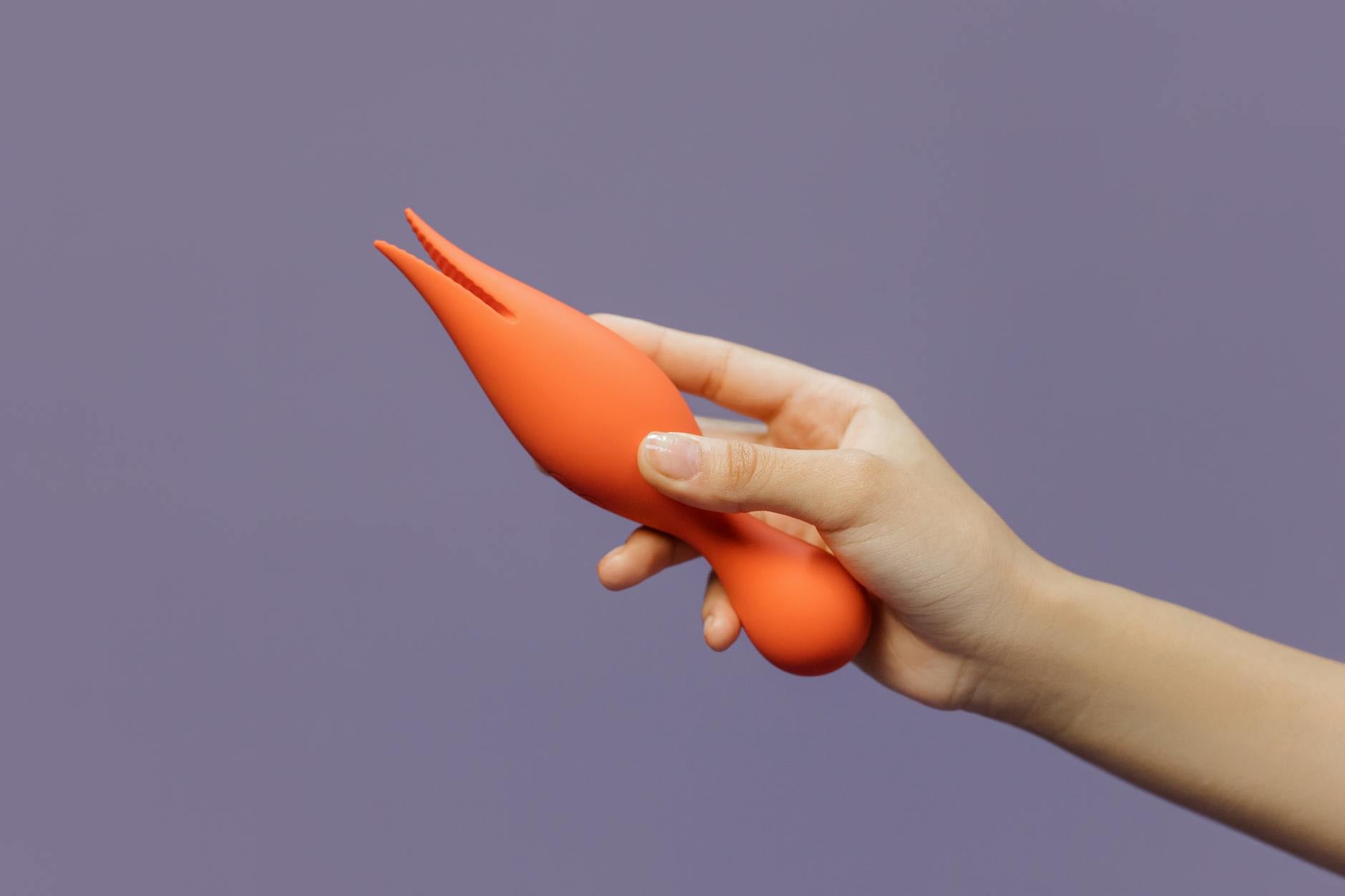
Photo by cottonbro studio on Pexels
When to add a partner into the equation
If you have one, bringing them back into sexual connection after antidepressant numbness is delicate. Your partner might have absorbed some blame for the flatness. They might also have moved on from expecting sex from you, which creates its own friction when you start rebuilding.
The simplest move: use the lemon vibrator solo first. Get your nervous system responses back. Once you have a few successful sessions alone, you can think about partnered play. And even then, start small. Your partner's job isn't to make you orgasm. It's to be present and curious while you figure out what your body can do now.
If you're struggling to reconnect with your partner during this phase, rebuilding desire after relationship disconnection covers that territory more deeply.
Red flags that mean talking to a doctor
If you're using a lemon vibrator consistently for 8-12 weeks and seeing zero response, something else might be going on. Pain, numbness that doesn't shift at all, or complete loss of desire can point to other medical issues. Talk to your gynecologist or psychiatrist. Some people need a medication adjustment. Some need to explore whether other factors (hormone levels, thyroid function, relationship stress) are layering on top of the SSRI side effect.
Also, if you're considering stopping your antidepressant to fix sexual function: don't make that call alone. Your psychiatric medication is doing something important. There might be better solutions that keep you safe and also bring pleasure back. Your prescriber is the person to have that conversation with.
Using a lemon sucker specifically
If you've decided to try a Get Lem Sucker lemon vibrator, here's what sets it apart in this situation. The suction mechanism is gentler on oversensitized tissue while still registering clearly in your nervous system. Start on pattern 1 or 2 every time. Most people on SSRIs find patterns 1-4 are where the real magic happens. Intensity doesn't matter here. Consistency does.
Water-based lube helps, even if you don't think you need it. It reduces friction and makes the suction sensation feel smoother, which matters when your nerve endings are already struggling to register pleasure.
The thing to remember
Your antidepressant didn't steal your sexuality. It muted the signal. That's different, and it's reversible. Using a lemon clitoral vibrator is one tool among many that can help you rebuild sensation and reclaim a part of yourself. But it only works if you're patient, consistent, and willing to redefine what pleasure looks like now.
Orgasm will probably come back. It might look different. That's not a loss. That's evidence that you're rebuilding from the ground up.
People also ask
Can I use a lemon vibrator if I'm still on the medication that flattened my sensation?
Yes. You don't have to wait for your medication to change or stop. In fact, starting with a lemon sucker while you're on the SSRI helps your body learn a new pathway for pleasure. You're building capacity, not waiting for chemistry to shift. Many people find that once they've spent weeks rewiring sensation with the vibrator, the response sticks even if nothing else changes about their medication.
How do I know if the numbness is the medication or something else?
Timing is your first clue. Did sexual response flatten right around when you started the antidepressant? That's usually the medication. If numbness has been there longer, or if it came on gradually before the medication, something else might be involved. Hormone imbalance, thyroid function, relationship stress, trauma, or other medical conditions can all flatten sensation. An honest conversation with your doctor helps sort this out.
Will switching to a different antidepressant fix the sexual side effects?
Sometimes. SSRIs as a class tend to cause sexual dysfunction more than other antidepressants. Bupropion and mirtazapine are less likely to flatten pleasure. But switching medications is a significant decision, and it doesn't always work. Some people switch and feel better immediately. Others switch and notice zero difference. This is worth discussing with your psychiatrist, especially if sexual function matters deeply to you.
Can I use a lemon vibrator with other body parts if clitoral sensation is completely gone?
Definitely. Vulvas have sensation all over. Outer lips, vaginal opening, perineum, inner thighs. Try exploring those areas with a lemon sucker on low patterns. Sometimes a different body part registers sensation faster than the clitoris. Use that as your entry point while you rebuild sensitivity everywhere.
How long until I can have partnered sex again?
There's no deadline. Solo sensation rebuilding often takes 4-8 weeks. Adding a partner can happen whenever you feel ready, but go slow. The pressure of having someone else watching often reactivates the nervous system tension that's blocking pleasure in the first place. Many couples find that starting with you using the lemon vibrator solo while they're present (without any expectation of intercourse) is a good middle ground.
What if I get frustrated and give up before the sensation comes back?
That's extremely normal. Medication-related numbness is deeply frustrating, and it takes patience to rebuild. If you hit that wall, take a break. Come back to it in a few days. Talk to a therapist or your partner about the emotional piece. Sometimes the frustration isn't really about the vibrator. It's grief about what the medication took from you. That's valid, and it deserves space.
References and sources
Hartzema, A. G., Baum, C., & Recognizing Antidepressant Side Effects Study Group. (2008). "Antidepressants and genitourinary side effects: Incidence, mechanisms and management." Drugs, 68(16), 2354-2363.
Meston, C. M., & Frohlich, P. F. (2000). "The neurobiology of sexual function." Archives of General Psychiatry, 57(11), 1012-1030.
Modell, J. G., Katholi, C. R., Modell, J. D., & DePalma, R. L. (1997). "Comparative sexual side effects of bupropion, fluoxetine, paroxetine, and sertraline." Clinical Pharmacy and Therapeutics, 61(4), 476-487.
Rizzo, M., & Costagliola, C. (2006). "Behavioral teratology of antidepressant drugs: An overview." Reproductive Toxicology, 21(2), 121-129.
Wright, S. (2010). "Antidepressant-induced sexual dysfunction: A comprehensive review of the literature." Journal of Psychopharmacology, 24(4 Suppl), 21-32.
If numbness persists after consistent use, reach out to Get Lem Sucker support or speak with your healthcare provider about next steps.