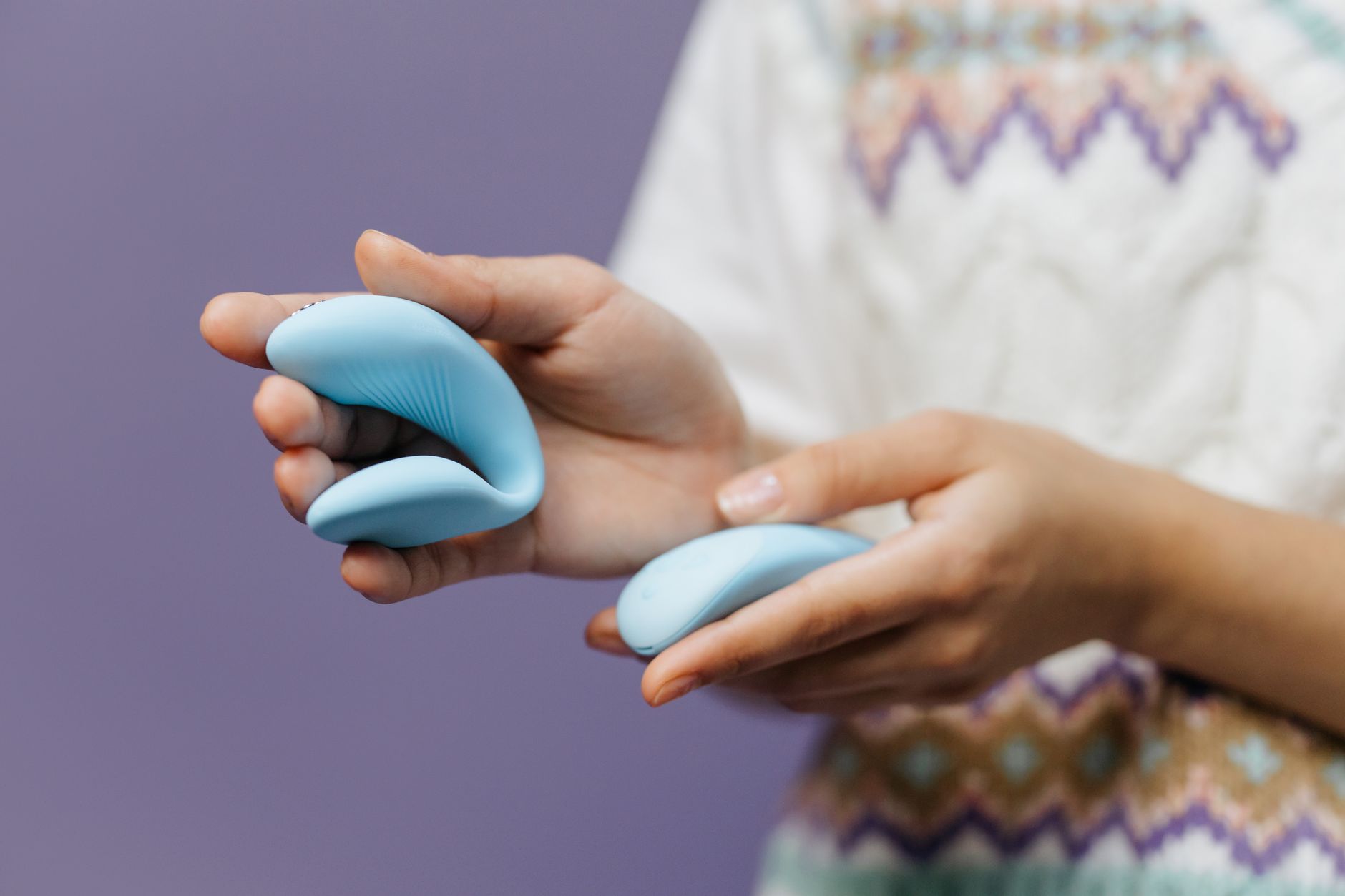
The silent distance nobody names
Your partner won't talk about sex. Not in angry fights, not in gentle moments, not even when you're both naked. The subject exists in the room like furniture they keep bumping into but refuse to acknowledge. This isn't necessarily dead bedroom territory, but it's the quiet version. Presence without voice. Touch without words.
Here's what makes this different from other relationship friction: sex talk avoidance isn't always about rejection. It's often shame, learned silence, fear of vulnerability, or the simple habit of not having learned the vocabulary. Some people grew up in homes where pleasure was never mentioned out loud. Others learned that wanting things makes you needy. Your partner might be avoiding the conversation not because they don't care about intimacy, but because they don't know how to start.
A lemon vibrator, used thoughtfully, can be the conversation starter your words haven't managed yet.
Why physical objects work where words fail
There's a phenomenon in couples therapy I see regularly: when something exists in the abstract ("we should talk about our sex life"), it stays abstract and scary. When it becomes concrete ("this is a thing I bought, here it is"), the conversation shifts. Instead of discussing feelings about sex in the void, you're discussing a specific object, a specific sensation, a specific moment. That's exponentially less threatening.
A lemon vibrator is particularly good at this because it's not a demand. It's not a judgment on what your partner is or isn't doing. It's an invitation to something new, something external, something that belongs to neither of you and both of you at once. It depersonalizes the vulnerability.
Your brain responds differently to concrete proposals than abstract ones. "We never have good sex" is a criticism. "I want to try this with you" is collaboration. The lemon vibrator is the collaboration.
The setup that actually works
Don't ambush. That's the first rule.
You're not leaving it on the nightstand. You're not bringing it out mid-intimacy and hoping they'll read your mind. Instead, bring it into the house like you'd bring home a book or a candle. Leave it visible but not pointed. "I ordered something. No pressure at all. Just thought we could try it together sometime if you want."
Then wait. Let them approach you with curiosity or questions. If they ask what it does, explain it clearly: air-suction technology, feels different than other toys, designed specifically for clitoral sensation. If they don't ask, don't push.
The waiting part is doing the work here. You're signaling that this isn't a crisis that needs solving. It's just an option. Your willingness to wait removes the pressure that makes people shut down harder.
How to introduce it without dialogue if dialogue is impossible
Some partners really can't talk. Not yet. Maybe not ever, actually. That doesn't mean you abandon the possibility of shared pleasure.
Start alone. Use your lemon vibrator in privacy, let yourself experience what it does. This is important because then when you bring it into shared space, you're not doing it from a place of desperation or hypothesis. You know what you're talking about. "It actually feels incredible" is convincing in a way that "it would probably be nice" isn't.
Then try proximity. Use it when your partner is in the next room, or even in the same room but not engaged. Not as performance, but as permission. You're showing them that pleasure is a normal thing that happens in this house. You're normalizing it through your own ease with it.
When your partner seems curious (they ask what you're doing, they linger nearby, they make a joke that's half-genuine), that's your moment. "Want to see what it feels like?" Or even simpler: "Want to try?" You don't need a whole conversation to move forward.
The actual integration into shared intimacy
Once you've both acknowledged the lemon vibrator exists and your partner has shown interest, introducing it during sex is straightforward.
Start at lower intensity settings. This isn't about overwhelming sensation. It's about finding a rhythm together. Your partner might enjoy holding it. They might enjoy watching you use it. These are different conversations without words, and they tell you a lot about what they're comfortable with.
Some partners ease into this gradually. First time, maybe they're just present. Second time, they might touch you while you use it. Third time, they hold it themselves. There's no timeline. The point is each step requires less verbal negotiation than the previous one because the object has already opened the door.
What happens when they come around
Here's where this actually works as a relationship intervention: once you've broken the silence with an object, the silence itself becomes harder to maintain. You've proven that pleasure can exist in your shared life without shame or judgment. You've shown that wanting something doesn't end the world.
Many partners who avoid sex talk find that after successfully introducing a lemon vibrator, other conversations become easier. Not because the toy is magic, but because you've both survived a vulnerable moment and found it was fine. Better than fine.
You've created evidence that your relationship can hold complexity. That pleasure matters. That trying new things doesn't mean the old things disappear. That you can want something and ask for it without destroying the foundation.
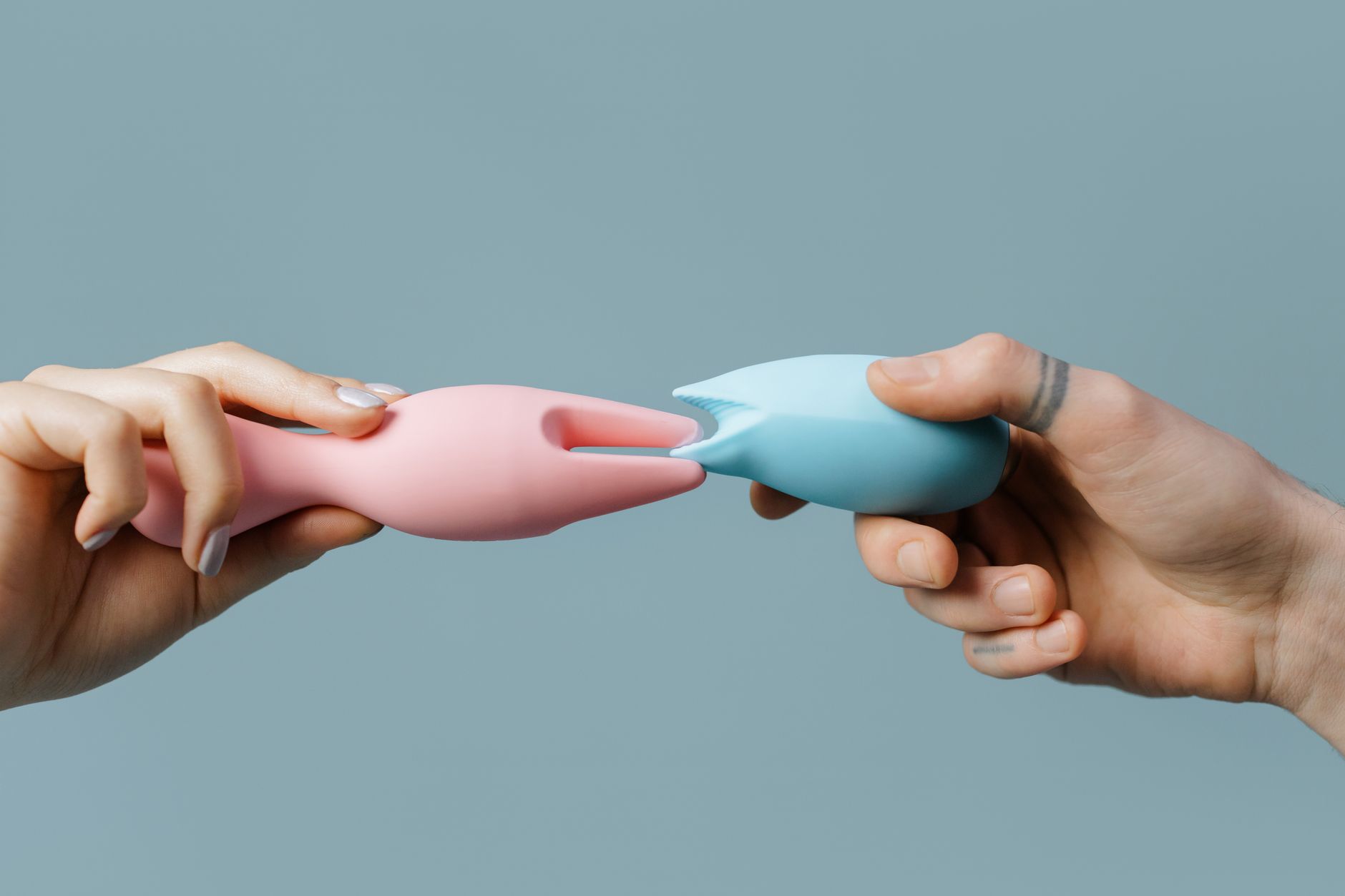
Photo by cottonbro studio on Pexels
The patterns to watch for
There's a meaningful difference between "my partner is uncomfortable with sex toys" and "my partner is uncomfortable with intimacy," and a lemon vibrator will help you see which is which.
If your partner engages with the toy but doesn't talk about it, that's often progress. Engagement is agreement. If they actively avoid it even after multiple low-pressure offers, you might be looking at a deeper intimacy issue that needs actual conversation or professional help.
If they engage enthusiastically but the avoidance continues elsewhere (still won't discuss desire, still acts embarrassed, still shuts down), you've confirmed that the silence isn't about the sex. It's about something underneath. In that case, how to use a lemon vibrator for deeper intimacy when emotional distance grows might be your next read.
When to bring in outside help
If you've introduced the lemon vibrator, your partner has engaged, and the conversations still aren't happening, you're probably looking at needing a therapist or sex educator. This isn't failure. This is information.
Some avoidance is protective. Some is pathological. A trained professional can help you figure out which, and more importantly, whether both of you want to move past it. Not everyone ends up choosing intimacy. Some people choose comfort or the familiar. That's information too.
The reality of using pleasure as a bridge
Introducing a lemon vibrator into a relationship where sex talk is avoided is not the same as solving the avoidance. But it's a beginning. It's a way of saying "I'm not asking you to become someone different. I'm asking you to stay here with me while something new happens."
Sometimes that's enough to crack the door open. Sometimes it's enough just to know you tried something different. Either way, you've moved from abstract to concrete, from silence to action, from waiting to seeing.
Your partner's silence doesn't have to be permanent. The lemon vibrator is just the first thing you're inviting them to share.
People also ask
How do I bring up using a toy if my partner is very shy?
Don't make it a conversation yet. Make it a physical thing. "I got this, no pressure, just seemed interesting." Let them investigate at their own pace. Shy partners often respond better to concrete objects than abstract proposals. The toy is doing some of the asking for you.
What if my partner thinks a toy means they're not enough?
This is real and worth addressing, but the lemon vibrator actually helps. You're not replacing them. You're adding to the experience. Many partners feel relieved once they try it because they realize they don't have to do all the work alone. The toy becomes collaborative, not competitive.
Can I use a lemon vibrator if my partner refuses to talk about it?
Yes. Use it in your own time first. Use it confidently. Normalize it. Your comfort with your own pleasure is often the thing that helps partners relax. Shame and secrecy are contagious. So is ease.
Is introducing a toy the same as fixing communication problems?
No. It's a start. It creates a new context where communication might become easier. But if the avoidance is rooted in deeper issues like shame, control dynamics, or fear, you might need how to use a lemon vibrator when your partner wants to participate but feels left out or professional support.
What intensity should I start with?
Low. Always low with a new toy, especially with a partner who's hesitant. Sensation can surprise people. Start at pattern one or two and let your partner explore higher settings at their own pace. This removes another source of anxiety from the introduction.
How long should I wait before trying this?
There's no timeline. Some relationships are ready immediately. Others need weeks or months of the toy just existing in your space before curiosity kicks in. The key is no pressure. The moment you start pushing, you've reinvented the original problem.
What if they use it and then never mention it again?
That's often fine. It means they were willing to try. Whether or not they bring it up verbally, you now have shared data about what works for both of you. Let them process in silence if they need to. The next time sex happens, they'll remember. You don't always need words to move forward together.