
Here's the thing about no-penetration intimacy
When one partner doesn't want penetration, couples often feel stuck. They assume sex either happens the traditional way or not at all. That's not true. A lemon clitoral vibrator changes the equation entirely because it centers external stimulation in a way that feels complete, not like a compromise.
I've worked with hundreds of couples navigating this preference. Some choose it for physical comfort. Others for anxiety, trauma history, or simply because penetration has never worked for them. Whatever the reason, the couples who thrive are the ones who stop seeing no-penetration sex as a limitation and start treating it as its own language. Lemon vibrators are fluent in that language.
Why external stimulation feels different (and often better)
When you remove the expectation of penetration, something shifts psychologically. There's less performance pressure, less anxiety about "getting there," and more room to be present. Physiologically, external-only stimulation through a lemon vibrator concentrates sensation exactly where most people need it to orgasm. The clitoris has 8,000 nerve endings. Penetration stimulates some of them. A lemon sucker vibrator stimulates all of them.
That's not a small difference. For many people, especially those who've never had reliable orgasms during penetrative sex, lemon clitoral vibrators feel revelatory. Partners often report that watching their person respond to external-only stimulation is intensely erotic in ways they didn't expect. The pressure is off both sides.
The conversation before you start
Honestly, this is where most couples skip a step. You need to talk about what "no penetration" actually means in your specific partnership. Does it mean:
- No penetration at all, but external touch and toys are fine?
- No penetration by a penis, but fingers or other tools are okay?
- No vaginal penetration, but anal play is welcome?
- External clitoral stimulation only?
These are different things. I've seen couples assume they're on the same page and spend weeks frustrated because they're actually having two different conversations. Specificity is kind. It removes guesswork and shame. You're not negotiating. You're clarifying.
Once you know what works, the lemon vibrator conversation becomes straightforward. "I want to use this tool. Here's what I'm hoping it will feel like. What are you hoping for?" That's it.
How to introduce the lemon vibrator into external-only sex
Start slow and let sensation build. Many partners bring the lemon vibrator in during foreplay, on the lowest setting, with plenty of lube. Water-based is safest if you're using fingers alongside it. The vibrator itself doesn't need lube unless your person prefers it, but the vulva does.
If your partner is nervous about toys, the gentlest entry is often "I want to use this on you while we're together, and I want to watch your face." That reframes it from a tool replacing them to a tool they're using together. Some couples find that holding hands while using the vibrator deepens the intimacy layer. Others prefer the toy to take center stage. There's no right way. Preference reveals itself quickly.
Once the vibrator is in play, rhythm matters more than speed. Many people chase orgasm by turning up the intensity, but for external-only stimulation, steady rhythm at a moderate intensity often gets better results. Your partner can guide you. "Slower," "stay right there," "just like that for a bit" are the directions that matter. Honor them. They're not criticism. They're a map.
What partners often worry about (and how to handle it)
One partner feels replaced. This is the big one. If a toy produces orgasm faster or more reliably than a partner can, some people feel inadequate. Here's the reframe: a lemon clitoral vibrator isn't replacing you. It's enhancing what you're already doing together. You're still present. You're still intimate. The vibrator is the same as lube or a comfortable position. It's a tool that helps your person feel good.
Where it gets tricky is if one partner uses the vibrator solo regularly and then expects the same results during partnered sex. That's not a vibrator problem. That's a communication problem. The solution isn't ditching the toy. It's being honest about what solo play with toys does versus what partnered sex with toys can do. They're different experiences, and both are valuable.
Another worry: penetration-free sex feels less "real." This one comes up constantly. I push back on it every time. Orgasm is orgasm. Intimacy is intimacy. The vessel doesn't change the content. Couples who commit to external-only exploration often tell me later that they had the most connected, intense sexual experiences of their relationship. No pressure. No pain. No performance. Just presence.
Building a pleasure routine without penetration
The couples who report the most satisfaction are the ones who treat no-penetration sex as its own complete practice, not a consolation prize. Here's what that looks like:
Start with connection. Touch without the vibrator first. Hands, lips, attention. Five or ten minutes of this changes everything. It says "I'm not rushing to the toy. I'm here." Your partner will feel that.
Introduce the vibrator gradually. External vulval massage with the vibrator on a low setting, lots of time, no goal. The goal is not orgasm. The goal is sensation. That mindset shift matters wildly.
Let rhythm build. Many people assume they need to increase speed or intensity to build arousal. Often the opposite is true. Steady, patient rhythm at the same level allows sensation to compound. Your partner's body will tell you when the intensity needs to shift.
Finish however feels right. Some people come during external stimulation with a vibrator. Some build to the edge and then have their partner finish them with fingers or mouth. Some plateau and that's exactly fine. The pressure to reach orgasm every time is one of the biggest pleasure-killers in partnership. Release that.
When one partner prefers the lemon vibrator solo
This happens constantly and it's not a problem unless you make it one. Many people find that they have easier or more intense orgasms alone with their lemon clitoral vibrator than with a partner. That's neurologically normal. Solo play removes all the monitoring of your partner's experience, all the performance anxiety, all the timing concerns. It's just your body and sensation.
The couples who thrive are the ones who celebrate this. "I'm glad you have something that works for you." Then, separately, you build what works for both of you together. Those are two different conversations and two different experiences. One doesn't diminish the other.
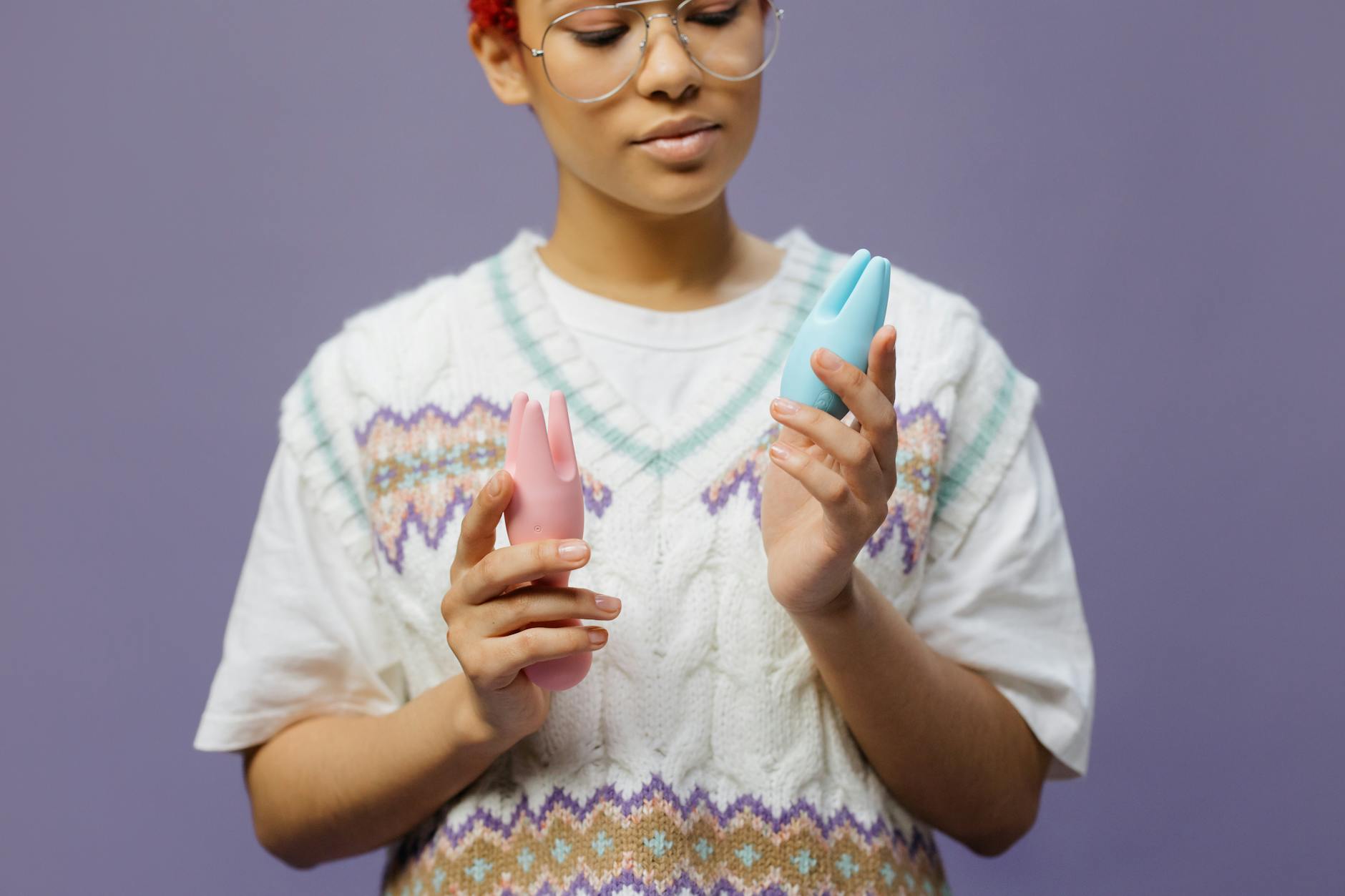
Photo by cottonbro studio on Pexels
How to talk about it if intensity drops over time
When you use a lemon vibrator regularly, your nerve endings adapt. Orgasms might become harder to reach or feel less intense over time. If this happens in your partnership, the fix isn't to abandon the tool. It's to cycle it. Take a break. Two weeks without it. Your sensitivity resets fast. Then bring it back and the sensation returns. Many couples build this rhythm naturally without even discussing it. Others need to talk about it explicitly.
If your partner's desire for penetration-free sex started as a preference and now feels like a wall, check in. Sometimes what felt comfortable shifts. That's information, not failure. A "can we revisit this" conversation might reveal that your partner is ready for something different, or that something else has changed. That's partnership. You adjust.
How lemon vibrators compare to other external toys
Lemon clitoral vibrators like the ones at Get Lem Sucker use suction and vibration together, which many people find more intense and nuanced than vibration alone. The suction creates a seal and a pull sensation that some describe as closer to oral sex. If your partner has never orgasmed from penetration, external suction vibrators often work faster than traditional vibrators. That's worth knowing going in. You might expect a longer build time and find they reach climax in minutes. That's not your partner. That's the tool being effective.
Other external toys, like traditional vibrators or wand vibrators, work differently. More direct surface vibration, less suction. Many couples rotate between tools depending on mood. The lemon vibrator is often the workhorse for external-only couples because the sensation is so complete.
FAQ: Questions couples actually ask
Can we use a lemon vibrator during manual sex?
Absolutely. Many couples use the vibrator while their partner touches them with hands. The combination is often more intense than either alone. Start with hands first, bring the vibrator in once your partner is aroused.
What if my partner gets uncomfortable or wants to stop mid-session?
You stop. No conversation needed in the moment. Check in later when you're not in an intimate space. "I noticed we shifted. Everything okay?" Often there's nothing wrong. Sometimes there is. Either way, you learn something about what works.
Is a lemon vibrator painful if my partner has vaginal sensitivity?
Not usually, especially on lower settings. If sensitivity is significant, start on the lowest pattern, use plenty of water-based lubricant, and go slowly. If pain occurs, stop and talk to a doctor. Vibrators should feel good or feel like nothing. Never painful.
How do I explain to my partner that I want external-only sex but I still find them attractive?
Direct: "My body responds better this way. That has nothing to do with how I feel about you. I want this with you." Attraction and preference are different things. Your partner might need to hear that distinction multiple times before it lands.
Can we use the lemon vibrator if one of us is on antidepressants?
Yes. Many people on SSRIs find that external vibration works better than other approaches because it provides direct, consistent stimulation. If orgasm is harder on medication, consistent rhythm with a quality vibrator often helps. Some people pair it with longer warm-up time. Others find the vibrator is exactly what they need.
What if the vibrator doesn't work for my partner?
Then it doesn't work. Not every tool works for every person. Some people are texture-sensitive. Some don't like vibration. Some have trauma associations. All of that is valid. If the lemon vibrator isn't the answer, try something else or skip toys entirely. The tool serves the relationship, not the other way around.
The real benefit of choosing no-penetration intimacy
When couples make this choice consciously, something shifts. There's less performance anxiety, less pressure to "finish," less focus on a goal and more on the actual experience. The irony is that people often report more orgasms, more pleasure, and more connection. Not despite the limitations. Because of the clarity. When you know what's off the table, you get creative about what's on it. That creativity builds intimacy in ways traditional sex sometimes doesn't.
If your partner prefers no penetration and you're wondering how to move forward, start here: treat it as an opportunity, not a compromise. Bring curiosity, not judgment. A lemon clitoral vibrator designed for external stimulation is one of the smartest tools for this specific terrain. It centers sensation where it matters, removes complexity, and often works faster and more reliably than other approaches. That's not settling. That's strategy.
If you have questions about how to navigate this specific dynamic with your partner, or if you want guidance on building intimacy around a preference like this, reach out. These conversations are exactly what I help couples work through.