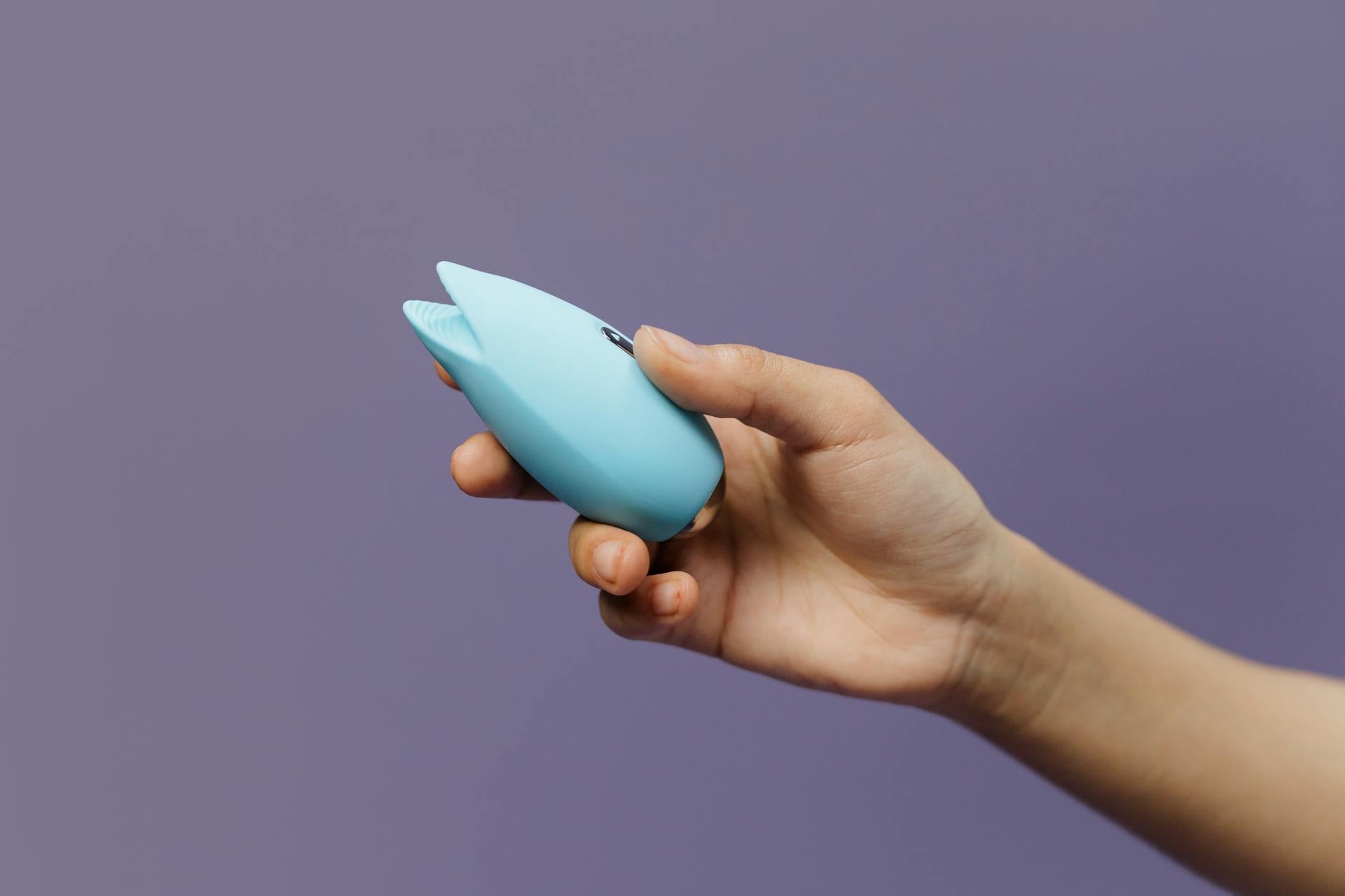
Here's the thing about sensation fatigue
You're not imagining it. You're not broken. And no, your clitoris hasn't gone numb permanently. But if you've noticed that your lemon vibrator feels less intense than it used to, or that you need it on a higher setting to feel anything at all, that's a physiological pattern called sensory adaptation. It happens to almost everyone who uses a clitoral vibrator regularly, and it's completely reversible.
The good news: understanding why it happens is half the battle to fixing it.
What's actually happening to your nerves
Your clitoris is packed with specialized nerve endings designed to detect sensation. When you use a vibrator repeatedly, especially at high frequencies like the lemon's powerful suction settings, those nerves get flooded with stimulus. Your nervous system doesn't process continuous high-intensity input the same way it processes varied stimulus. Instead, it adapts. It turns the volume down.
This is the same mechanism that stops you from feeling your clothes on your skin after five minutes, or noticing background noise once you're used to it. Your brain is incredibly efficient. It filters out static and prioritizes novelty. When stimulus becomes predictable and constant, the nervous system essentially says: noted, moving on.
The clitoris is actually more sensitive to this adaptation than other body parts because the nerves are so densely packed and responsive. High-frequency vibration, when used the same way over and over, creates a numb sensation faster than lower-frequency toys. The lemon's suction action is powerful precisely because it's so effective at sustained, repetitive stimulation. That same power, used identically each time, can train your nerves to tune out.
Three reasons you might notice the numbness creeping in
First: frequency matters more than you think. Using the lemon at settings 4 or 5 several times a week, every session, teaches your body to adapt. Your nerves literally become less responsive to that particular frequency. If you're using the same pattern every single time, you're training desensitization.
Second: duration stacks up. Sessions that stretch past 20 or 30 minutes, especially if you're chasing an orgasm that won't arrive, create fatigue. Lemon clitoral vibrators are designed for 10-15 minute sessions. Beyond that, you're asking for diminishing returns.
Third: physical factors amplify it. Hormonal fluctuations, stress, dehydration, and even caffeine intake can shift how sensitive your clitoris feels on any given day. If you're stressed or sleep-deprived, you might experience numbness that has nothing to do with the vibrator itself. Add that on top of repetitive-use adaptation, and the effect feels way more pronounced.
Photo by Madison Inouye on Pexels
The reset protocol that actually works
Take a break. I know that sounds simple, but it's the most effective solution. Five to seven days without vibrator use allows your nerve endings to recalibrate. During that time, your sensory system resets its baseline. When you come back to the lemon, it will feel noticeably more intense.
For people who use their vibrator several times a week, I recommend a rotating pattern: use it intensely for two weeks, then take a full week off. That week off becomes preventive maintenance. Your sensitivity stays high because you're not training constant adaptation.
If you can't or don't want to take a full break, vary the settings aggressively. Use pattern 1 for a few sessions, then switch to pattern 3, then back to 2. Use different combinations of suction and pattern. Change the duration. Your nervous system adapts to sameness, not to novelty. If you're hitting your clitoris with the exact same stimulus in the exact same way every time, of course it's tuning out.
What works alongside the reset
Manual stimulation between vibrator sessions restores sensitivity faster than anything else. Finger stimulation at lower intensity teaches your clitoris to feel sensation again. You're essentially re-awakening the nerves to a different kind of input.
Moisture and circulation matter too. If you're using the lemon on dry tissue, your nerves are already working harder to perceive sensation. Water-based lubricant improves nerve responsiveness directly. It's not just about comfort. Good hydration systemically helps too. Dehydration literally reduces clitoral engorgement and sensitivity. Drink water.
Stress is a major player that people miss entirely. Cortisol dampens sensation. Anxiety activates the sympathetic nervous system, which doesn't prioritize pleasure. If you're using your lemon clitoral vibrator while stressed or distracted, your nerves won't feel it the same way. A few minutes of breathing before use, or a short walk, genuinely changes the experience.
The pattern trap
Here's something specific about how we use lemon vibrators: we find a winning pattern and we stick with it. Pattern 3 got us there once, so we use pattern 3 forever. That's exactly backward. Your nervous system learns that pattern. It stops processing it as novel.
Instead, treat your lemon like an instrument with multiple settings for a reason. If you've been using the same pattern for more than a few weeks, you've probably adapted to it already. Switch. Try patterns you've never used. Combine suction and pattern in ways you haven't before. Your pleasure depends on novelty more than you realize.
When to see someone
If you've taken a full two-week break, you're varying your patterns, you're using lubricant, and you're managing stress, but the numbness isn't improving, something else might be at play. Certain medications, especially SSRIs and some blood pressure drugs, genuinely reduce clitoral sensitivity. Some hormonal birth control methods do the same. If you're on medication that might be contributing, it's worth discussing with your doctor. There are often alternatives that won't dull sensation.
Pelvic floor tension can also create the sensation of numbness even when the nerves are fine. If your pelvic floor is clenched, the muscles around the clitoris are tight, which restricts blood flow and nerve responsiveness. Learning to relax that area through breathing or gentle stretching can restore feeling surprisingly quickly.
The real takeaway
Your lemon sexual toy isn't failing. Your nervous system is doing exactly what it's supposed to do: adapting to repeated stimulus. The numbness is a signal to change something. A break, a pattern switch, better hydration, or stress management will bring sensitivity roaring back. Most people feel a noticeable difference in intensity within three to five days of variation or rest.
Your clitoris wants to feel pleasure. It's wired for it. Numbness isn't permanent. It's just your nervous system asking you to keep things interesting.
People also ask
Can you permanently damage clitoral sensitivity with a vibrator?
No. Clitoral nerves don't sustain permanent damage from vibrator use. Even with intensive daily use over years, sensitivity returns once you introduce variation or take a break. The adaptation your nervous system creates is reversible. That said, if you experience sharp pain, persistent numbness beyond two weeks of rest, or bruising, those warrant a conversation with a gynecologist to rule out other issues.
How often should you use a lemon clitoral vibrator to avoid desensitization?
There's no universal rule, but most people maintain sensitivity best with 2-3 sessions per week, varying patterns and duration each time. Some people use theirs every day without numbness because they rotate settings obsessively. Others hit adaptation with twice-weekly use if they're too regimented. The key isn't frequency. It's variation. If you're changing it up, you can use your lemon sucker more often without losing sensation.
Does lube actually help with vibrator numbness?
Yes, but not in the way most people think. Lube doesn't just prevent friction. It improves nerve conductivity. Dry tissue has reduced blood flow and nerve responsiveness. Water-based lubricant increases engorgement and makes clitoral nerve endings more responsive. The difference is measurable within one session. If you've been using your lemon without lube and wondering why it feels dull, that might be the entire answer.
Why does my lemon vibrator feel less intense than my partner's, even on the same setting?
Clitoral sensitivity varies wildly between people due to nerve density, hormones, stress levels, baseline hydration, medications, and individual nervous system wiring. Some people are simply less sensitive to high-frequency vibration. Additionally, if you've been using yours more frequently, you may have adapted while your partner hasn't. Sensation also shifts throughout the menstrual cycle, with stress, and with age. There's no "normal" intensity. What matters is what works for you.
Can you reset sensitivity faster than a full week off?
Partially. Three to five days off combined with aggressive pattern variation can produce noticeable improvement. Manual stimulation during that break accelerates reset. But a full seven days off, if you can take it, produces the most dramatic sensitivity return. Think of it like sleep. Shorter rest helps, but full rest restores you more completely.
Is numbness a sign I should switch to a different lemon sexual toy?
Not necessarily. Numbness is usually a usage pattern issue, not a toy issue. Switching toys might give you temporary novelty, but if you fall into the same repetitive pattern with the new toy, you'll hit adaptation again. The real solution is variety with what you already have. That said, if you genuinely prefer a different toy's sensation profile, trying something new isn't wrong. Just be intentional about why. If sensitivity is the issue, rest and variation solve it before a new toy does.