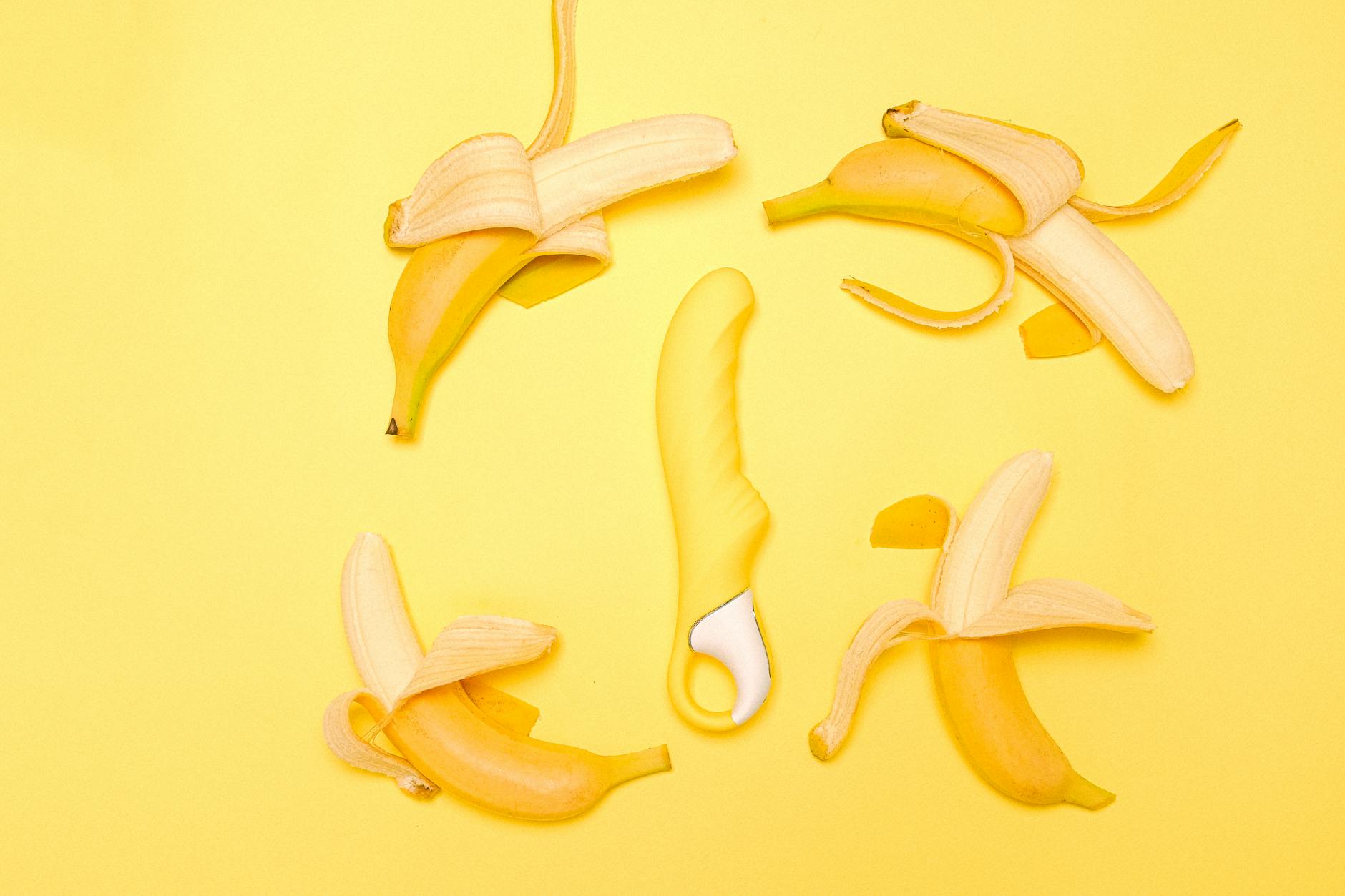
Let's start with the honest part
Your lemon vibrator isn't malfunctioning. Your body is. But not in a broken way. Every month, your hormones shift in ways that change how sensitive your clitoris is, how quickly arousal builds, and how intense stimulation feels. Same toy. Different nervous system. That's not a flaw. That's biology.
Most people don't realize their cycle affects sensation this directly because nobody talks about it. But once you understand what's happening, you can actually work with your body instead of fighting it.
How your cycle changes clitoral sensitivity
Your clitoris is packed with nerve endings, and those nerves are exquisitely sensitive to estrogen and progesterone. During the follicular phase (day 1 to ovulation, roughly), estrogen rises. This increases blood flow to the clitoris and makes the tissue more engorged. Your clitoral glans feels plumper, more sensitive, more easily stimulated.
Then ovulation happens. For a brief window, sensitivity peaks. This is when many people report that lower intensity settings on their lemon vibrator feel almost too intense. You might skip straight to pattern 3 or 4 when you'd normally start at pattern 1.
Then comes the luteal phase. Progesterone climbs. Estrogen drops slightly. The clitoral tissue becomes less engorged. The sensitivity dampens. Suddenly the intensity that felt perfect mid-cycle now feels muted. You find yourself turning up the intensity, reaching for faster patterns, or needing longer warm-up time.
This isn't in your head. It's measurable. Studies on vaginal sensitivity show predictable fluctuations across the cycle. Your clitoris follows the same pattern.
Why arousal speed changes too
It's not just sensitivity. The timing of arousal shifts month to month.
During the high-estrogen phases (right before and right after ovulation), your parasympathetic nervous system is more reactive. Blood rushes to your genitals faster. You can go from neutral to aroused in minutes. A few touches with your lemon vibrator and you're already building toward orgasm.
During the luteal phase, especially the week before your period, progesterone dominates. Progesterone is calming, heavier, less excitable. It takes longer for arousal to kick in. You might need 15 or 20 minutes of warm-up with your clitoral vibrator instead of 5 or 10. This doesn't mean you're broken. It means you need more time, and that's completely normal.
Many people interpret this as "I'm losing interest" or "Something's wrong with my libido." Nope. Your libido is fine. Your nervous system is just running a different setting.
The orgasm intensity piece
Here's where it gets interesting. During the follicular phase, orgasms often come faster and feel sharper, more explosive. During the luteal phase, they might take longer to build but feel deeper, more full-body, more sustained.
Neither is better. They're just different experiences. But if you're expecting the quick, sharp orgasm you had last week and instead you're getting a slow, rolling one, it can feel disappointing.
With a lemon vibrator, you might notice that the same pattern feels almost aggressive mid-cycle but just right during your luteal phase. Your body isn't inconsistent. The optimal stimulation for each phase is just different.
The progesterone slowdown is real
Progesterone doesn't just change sensation. It actually slows your nervous system response. Progesterone is what tells your brain to chill out, conserve energy, hunker down. It's why you're more likely to want to stay home, eat carbs, and nest during this phase. That same hormone is making your clitoris slower to light up.
If you're using a lemon vibrator during this phase and it feels like you're barely getting anywhere, that's the progesterone talking. Not a reflection on you, the toy, or your capacity for pleasure. Just physiology.
This is actually a great time to experiment with different patterns. Since you've got time on your side, you can explore the longer buildups, the rolling sensations, the ones that take 10 minutes instead of 2. Some people find they prefer their luteal phase orgasms once they stop fighting them.
Stress amplifies the fluctuation
Here's the complication: if you're stressed, the hormonal swings get bigger and more noticeable. Cortisol interferes with estrogen and progesterone signaling. It also makes your nervous system more reactive. A high-stress week can make your cycle-based sensitivity shifts feel chaotic.
You'll notice this especially in the luteal phase. A stressful week means it takes even longer to get aroused, stimulation feels even less intense, and it's harder to reach orgasm. This is why tracking your pleasure alongside your cycle and your stress level matters. You might be seeing a sensitivity shift that's half hormonal and half cortisol.
This is one reason how lemon vibrators help with arousal delay from stress and anxiety matters so much. When stress is compounding the luteal slowdown, having a toy that works with your nervous system instead of against it changes everything.
The estrogen dip mid-cycle
Wait. Estrogen rises during the follicular phase, peaks right before ovulation, then drops sharply. So there's a brief dip in sensitivity right after ovulation, even though you're technically still in the "high" phase.
This is why some people report that their peak sensitivity is a single day or two, not a whole week. You might have incredible clitoral responsiveness on day 13 or 14, but by day 15 it's already dampening even though you're technically still in the follicular phase.
If you're trying to track when your lemon vibrator feels most intense, pay attention to that day, not just "around ovulation."
How to work with these shifts
Three practical moves:
Track what you notice. For two cycles, jot down where you are in your cycle and how your lemon vibrator feels. What intensity did you start at? How long did warm-up take? Did you reach orgasm? How did it feel? After two cycles, you'll see your pattern. You'll know that days 10-14 are your "full power" days and days 21-28 are your "slower burn" days.
Adjust your expectations, not the toy. Don't blame your vibrator for feeling muted during your luteal phase. Instead, swap patterns. Use slower, longer vibrations instead of the fast jackhammer settings. Spend more time in warm-up. Give yourself permission for different paces on different weeks.
Use the luteal phase for exploration. Since you've got time and intensity isn't as urgent, this is when to try new patterns, new positions, new timing. Slow exploration often reveals nuances that fast, high-intensity sessions miss.
When it's more than just the cycle
If your sensitivity swings are extreme — like, completely non-functional some weeks and amazing others — or if the pattern doesn't match your cycle at all, talk to a doctor. Conditions like PCOS, thyroid imbalance, or hormonal contraceptive side effects can cause wild swings that go beyond normal cycle variation.
Similarly, if you're consistently feeling numb or disconnected even during your high-estrogen phases, that's worth investigating. How lemon vibrators improve pleasure after years of numbness walks through some of those deeper issues.
But for most people? The cycle shifts are normal, predictable, and absolutely workable.
One more thing
Your partner probably can't feel these shifts the way you can. This is useful information to have before you explain why you suddenly want a different pace mid-cycle. "My sensitivity changes with my hormones, so let's adjust what we're doing" is a much clearer conversation than "this isn't working anymore." It's not about them. It's about your nervous system running on a monthly schedule.
FAQ
Why does my lemon vibrator feel painful during certain parts of my cycle?
Pain usually signals low estrogen combined with insufficient lubrication or tension. If you're in your luteal phase and tissues are thinner, you might need extra water-based lubricant even if you normally don't. Some people also find their pelvic floor tightens during the luteal phase, which can make vibration feel sharp instead of pleasant. Try longer warm-up, more lube, and gentler patterns. If pain persists, it's worth checking with a pelvic floor specialist.
Does my birth control affect these cycle-based sensitivity shifts?
Yes, dramatically. If you're on hormonal contraception, you're suppressing the natural cycle. Many people on the pill report that their clitoral sensitivity stays more stable month-to-month, which some love and some find less engaging. If you're on a progesterone-only method (like the mini-pill or hormonal IUD), you might still get some sensitivity shifts. The conversation is worth having with your doctor because different formulations affect sensation differently.
Can I use my lemon vibrator more during my luteal phase to compensate?
You can, but you might not need to. The temptation is to crank up intensity to get the same sensation as your follicular phase. More useful: accept that this phase feels different and works differently. Your body might actually prefer a slower experience right now. Using the toy "harder" isn't solving a problem. It's fighting your body. Work with the pace your nervous system wants.
Does the timing of ovulation affect when my sensitivity peaks?
Yes. If you ovulate early in your cycle (day 11 instead of day 14), your sensitivity peak shifts earlier too. If you track ovulation using ovulation tests or temperature, you can predict your peak sensitivity days more accurately than just counting days.
What if my cycle is irregular? Will the sensitivity shifts still happen?
Probably yes, but less predictably. Even if your cycle length bounces around, you're still going through follicular and luteal phases. The shifts will happen, just not on a schedule you can easily predict. Tracking how your lemon vibrator feels becomes even more valuable because you can't rely on day-counting.
Does caffeine or hormones in my food affect clitoral sensitivity during my cycle?
Indirectly. Caffeine amplifies cortisol, which can dampen the natural cycle-based swings. Some research suggests that phytoestrogens in food (like soy) have a tiny effect, but it's not a major factor. The biggest culprit is usually stress and sleep. Prioritize those before worrying about your diet's effect on sensitivity.
The bottom line
Your lemon vibrator isn't inconsistent. Your nervous system is running a monthly program, and that program changes how sensation feels, how fast arousal builds, and what intensity works best. Once you understand that your clitoris has a cycle just like the rest of your body, you stop fighting the fluctuations and start working with them. Same toy, same body, different settings. And honestly, that's when pleasure gets really interesting.