
When desire frequency mismatches, something has to give
Your partner wants sex three times a week. You want it once, maybe twice. Or the opposite. One of you feels rejected. The other feels pressured. Neither of you is wrong. This is one of the most common friction points in long-term relationships, and it's rarely solved by willpower alone.
Here's what I've seen work: a lemon clitoral vibrator doesn't fix the mismatch, but it removes the shame from it.
Why frequency mismatches happen (and why they're not about attraction)
Desire frequency is shaped by stress, hormones, medication, sleep, work pressure, whether you had a good day, how much touch you've received that week, and frankly, random biology. It's not a fixed number. It fluctuates.
When one partner's natural rhythm is higher, the lower-desire partner often feels guilt. The higher-desire partner often feels rejection. That emotional load makes the whole thing worse. Sex stops being fun and starts being a negotiation.
A lemon vibrator shifts this dynamic because it's a third option. It's not your partner touching you. It's not you refusing your partner. It's you taking your own pleasure seriously, on your own timeline.
How this actually works in practice
Let's say your partner initiates more often than you do. You have three real choices:
Option 1: Say yes every time. You build resentment, sex becomes a chore, and eventually the whole relationship feels transactional. This fails.
Option 2: Say no, and your partner feels unwanted. Resentment builds on both sides. Also fails.
Option 3: You use a lemon vibrator on your own schedule, and your partner knows this. When they initiate and you're not feeling it, you're not lying or performing. You're also not rejecting them. You're just taking care of your own body separately. This works because it removes the either/or.
The key is transparency. Your partner isn't in the dark about whether you're interested in them. They know you genuinely have a lower frequency right now. The vibrator isn't a replacement. It's a relief valve.
The conversation you need to have first
Before you bring a lemon vibrator into this dynamic, you need one conversation with your partner. Not about the toy itself. About what's actually happening with desire.
Try this: "I love you and I'm attracted to you. My body's desire rhythm is just different from yours right now. That's not rejection. It's my body's reality. I want to take care of my own pleasure so we're not always negotiating ours. Can we talk about what that looks like?"
Then listen to what they actually need. Often it's not "have sex with me more." It's "I need to feel wanted" or "I need to feel close to you." Those are different problems. The vibrator solves the first. Connection work solves the second.

Photo by FounderTips on Pexels
When to use it solo, when to use it together
A lemon vibrator gives you flexibility.
Solo use: Your partner initiates. You're not in the mood. Instead of a drawn-out conversation or guilt, you can say, "I'm going to take 15 minutes for myself. I'd love to be close after." Then you use the vibrator, come, feel better, and you've got actual emotional bandwidth to reconnect.
This is huge. A quick solo session using a lemon clitoral vibrator often resets your nervous system enough that you can be present with your partner afterward. Not performing. Actually present.
Together: You're both in the mood, but at different intensity levels. Your partner wants longer foreplay or a quicker finish. A lemon vibrator lets you control your own experience. You're not waiting for them to get you there. You're stimulating yourself while they participate however feels good. This removes a ton of performance pressure for both of you.
Alternating: They get you off with the vibrator one time. You use it on yourself another time. Your partner watches or helps set the scene. This shares the labor and the pleasure without anybody feeling like they're doing all the work.
Why the lemon design actually matters here
If you're using a toy in front of your partner for the first time, you want something that feels intentional and pleasurable. A lemon vibrator is intuitive. It's small enough to use alone. It's powerful enough that you're not struggling. And it doesn't look clinical.
The suction-based design of a lemon clitoral vibrator works differently than a traditional vibrator. It creates a seal around the clitoris and pulses, rather than just buzzing. For a lot of people, this feels less overwhelming than straight vibration. You control the pattern and intensity. That control is important when you're building a new sexual dynamic with your partner.
What changes in the relationship when you normalize this
After a few weeks of using a lemon vibrator on your own timeline, something shifts. Your partner stops taking lower-frequency desire personally. You stop feeling guilty about having a lower frequency. Sex becomes something you both do because you want to, not because someone has to persuade someone else.
I've worked with couples where this exact move turned a 3-year resentment cycle around in months. Not because the vibrator is magic. But because it made visible what was actually true: both partners' desires are valid. Both partners' bodies are allowed to have different rhythms. Both partners can take care of their own pleasure without it being a referendum on the relationship.
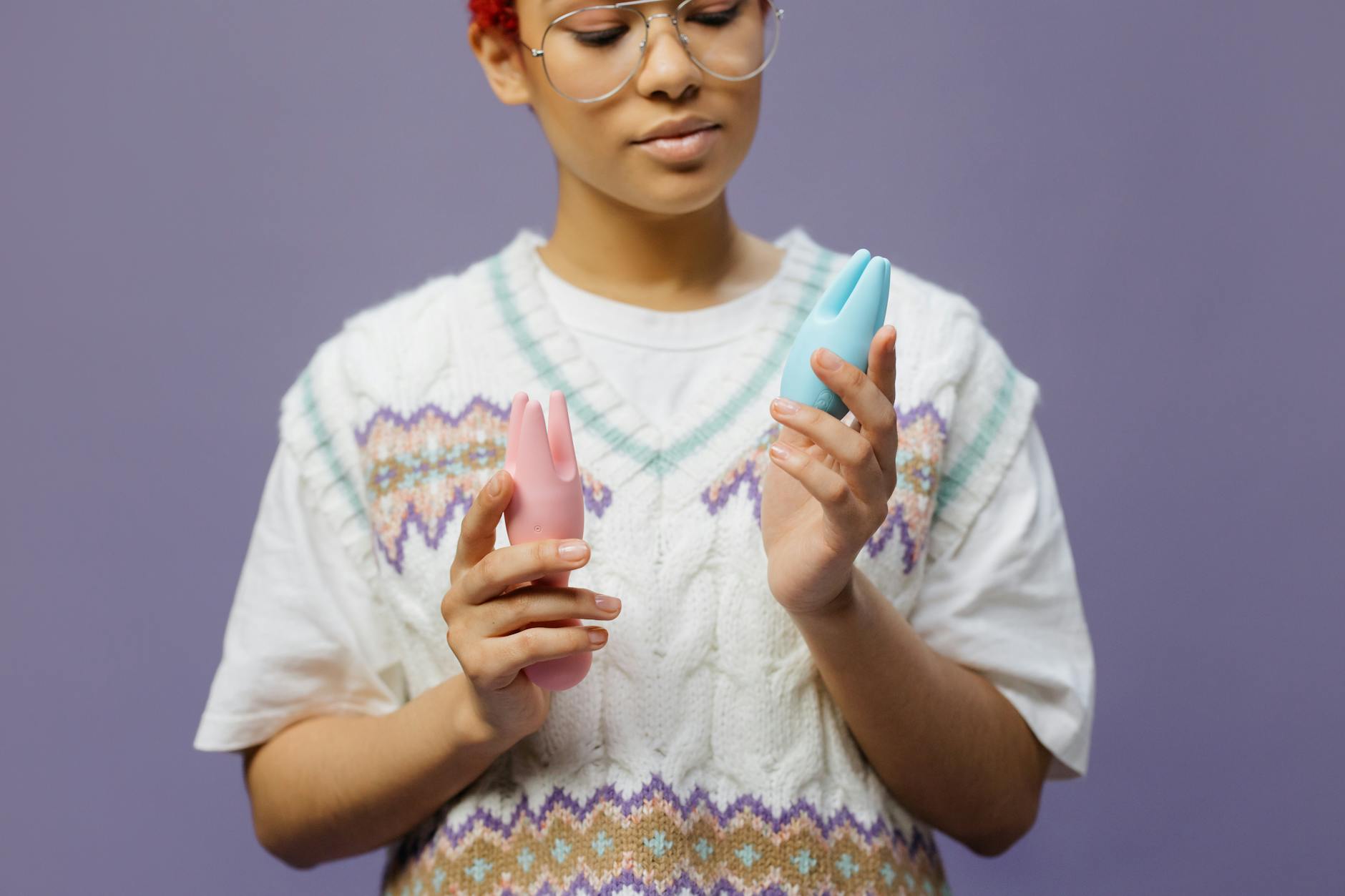
Photo by cottonbro studio on Pexels
How to handle the logistics without awkwardness
Be practical. If you're using a lemon vibrator in a shared space, keep it somewhere accessible and not hidden. Hidden toys feel shameful. Accessible toys feel like a normal part of your routine. Get a small charging dock. Keep it in the bedroom.
Tell your partner when you're using it. Not as a confession. As information. "I'm going to take a few minutes for myself before bed." They don't need details. But they need to not be surprised.
If you use it together, have a light conversation beforehand. "I'd like to try using this while we're together. Does that feel okay?" Most partners find it hot once they realize it takes pressure off them to be the sole source of your pleasure. You're not making them feel inadequate. You're making them feel relieved.
When this approach isn't enough
If the frequency mismatch is extreme (one partner wants daily sex, the other wants monthly), a vibrator helps but doesn't solve everything. That's a compatibility question, and it might need a real conversation about whether you're actually compatible, or whether something else is dampening desire.
If lower desire is coming from depression, anxiety, medication, or trauma, that's a different issue. A lemon vibrator can still help (you can explore pleasure on your own terms), but the real work is addressing the underlying thing. Consider talking to a therapist who specializes in this.
If your partner is resentful about you using a toy at all, that's worth exploring with someone who can help you both talk about what's really going on. Sometimes it's insecurity. Sometimes it's about control. Sometimes it's just a belief they were taught. All of those are workable, but not alone.
The bigger picture
Frequency mismatches are normal. They're not a sign you picked the wrong person or that the relationship is failing. They're a sign that you're two different humans with two different bodies. A lemon vibrator is just a tool that makes that easier to live with. Not by forcing your bodies to match, but by making it okay for them to be different.
Your pleasure matters when your partner wants sex more than you do. Not as a consolation prize. Not as a performance. As your actual entitlement. A lemon clitoral vibrator reminds you of that.
People also ask
How often should I use a lemon vibrator if my partner wants sex more frequently?
There's no right answer. Use it when you want to. That might be a few times a week, or a few times a month. The point isn't to match your partner's frequency. It's to have your own rhythm that feels good. If you're using it daily, that's fine. If you're using it once a month, that's also fine. Pay attention to what your body actually wants, not what you think you should want.
Will my partner feel replaced or inadequate if I use a lemon vibrator?
Not if you frame it clearly. The conversation is: "I want to have pleasure on my timeline. That's separate from my desire for you. This isn't about you being inadequate. It's about me taking care of my own body." Most partners feel relief when they realize sex doesn't have to be a negotiation anymore. They also often find it hot. The pressure is off, so sex becomes fun again.
Can we use a lemon vibrator together if he has a lower frequency than I do?
Absolutely. A lemon clitoral vibrator works the same way. You're the higher-desire partner, so you might use it to get yourself off on days your partner isn't in the mood. Or you use it together sometimes. The tool doesn't care about frequency. It just gives both of you more options.
What if my partner thinks the vibrator is weird or unnecessary?
That's a belief worth exploring together. Ask them what specifically feels weird. Is it the vibrator itself? The idea that you want pleasure outside of partnered sex? Something about how they were raised? Once you understand the actual concern, you can address it. Sometimes it's just about getting used to the idea. Sometimes it requires a deeper conversation about what sex and pleasure mean to both of you.
How do I use a lemon vibrator if we share a bed and I don't want my partner to feel awkward?
Talk about it first. "I'd like to take some time for myself sometimes. Is it okay if I do that while you're sleeping or reading nearby?" Most partners are fine with it, especially once they realize they don't have to be involved. You can also set a specific time (like Sunday morning while they're making coffee) to give you both space. Normalizing it makes it less awkward fast.
Does using a lemon vibrator solo affect how I feel about sex with my partner?
No. Actually the opposite. When you're not feeling pressured to have sex on your partner's timeline, you often want it more, and you enjoy it more. You're not resentful. You're not performing. You're just having sex because you actually want to. That's better for both of you.
What happens next
Frequency mismatches don't disappear. But they stop being a source of shame when you normalize them. A lemon vibrator is one tool for that normalization. It's not the only tool. The bigger one is the conversation with your partner about what's actually true for your body, and getting curious about what's true for theirs.
If you're looking for more on navigating desire differences in long-term relationships, I recommend reading about how to use a lemon vibrator when your partner's libido mismatches yours for deeper strategies. You might also find helpful guidance on reconnecting after intimacy gaps if the mismatch has created distance over time.
Your body's desire is valid. Your partner's is too. Both can be true at the same time.