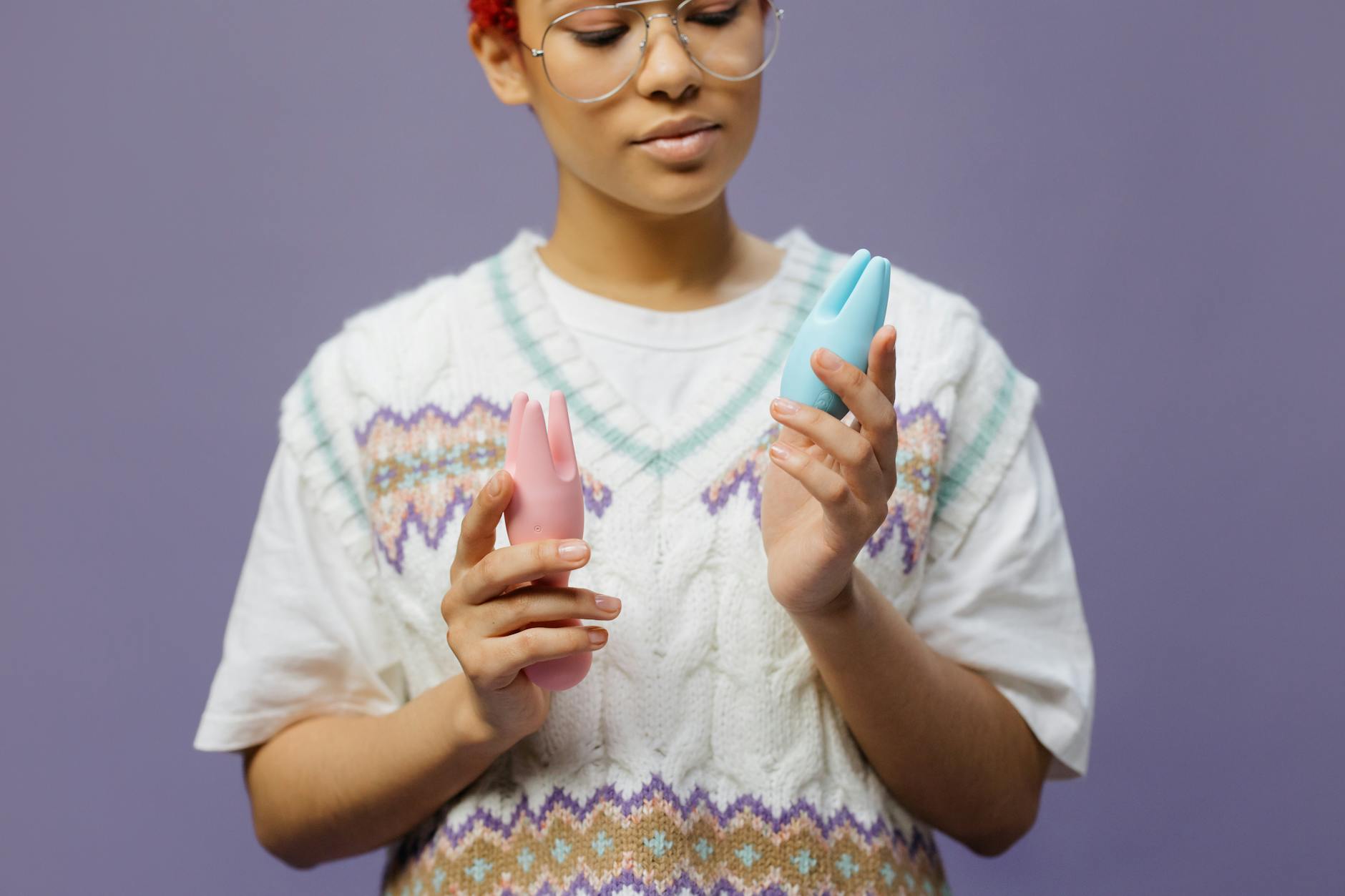
How to choose the right lemon vibrator for your body
Let's be real: you've probably bought a toy that looked amazing online and felt completely wrong against your body. Wrong angle, wrong intensity, wrong vibe pattern. The issue isn't you. It's that most lemon vibrators and clitoral vibrators are designed for an imaginary average body, and almost nobody has that.
Your clitoris has its own shape, size, and sensitivity profile. Your pelvic anatomy, hand size, and how you actually use a toy during partnered sex (or solo) all matter. The right lemon vibrator should feel like it was made for you. The wrong one just sits in a drawer. Here's how to navigate the design choices and land on something that actually works.
What "design" actually means when you're shopping
When I talk about lemon vibrator designs, I'm talking about three things: the overall shape and contact surface, the size and weight, and the vibe pattern itself. A lemon clitoral vibrator with a broad, flat top works completely differently than a pointed one. A toy that weighs 2 ounces feels different than one that weighs 6. A pattern that's a steady pulse hits different from one that ramps up and down.
Most people assume they need to pick based on power level alone. That's the trap. A toy can be wildly powerful and still feel wrong if the shape doesn't fit your anatomy. Same thing works in reverse. A gentler lemon vibrator can be transformative if the design matches how your body actually responds.
The shape question: broad vs. pointed vs. suction
Your clitoris isn't one thing. It's an external head, but it also extends internally in two "legs" (the crura) that run down and back. Some people's external glans is large and more pronounced. Others have a smaller, more tucked glans. Some have very visible labia minora that sit right at the opening. Some sit further back.
A broad, flat-topped vibrator covers more surface area and distributes vibration across a wider zone. This works beautifully if you have a larger clitoral glans or if direct, pinpoint sensation feels too intense. It's also fantastic for people whose most sensitive spot is at the sides of the glans or in the tissue around it, not the very tip.
A pointed or narrower design gives you more precise contact. If you know your pleasure comes from a very specific spot (the tip of the clitoris, or just under the hood), a more focused shape lets you zero in. The downside is that you have to be more intentional about positioning. One millimeter off and it doesn't land right.
Air-suction vibrators, like the lemon sucker design, work differently entirely. They create a gentle seal and pulse around the clitoral head rather than vibrating against it. This is brilliant if you have thin tissue, if you've experienced years of numbness, or if direct vibration has ever felt harsh or overstimulating. The suction approach stimulates without the same mechanical intensity.
Size and hand ergonomics matter more than people think
A lemon vibrator that's too large for your hand becomes a tool instead of an extension of your body. You fatigue faster. You can't angle it the way you want. If you're using it during partnered sex, your partner can't access the angles they need. If it's too small, you lose control or you're constantly gripping hard to stabilize it.
If your hands run small, a larger lemon sexual toy or device designed for someone with bigger hands will exhaust your hand muscles before it gets you there. If your hands are large, a tiny toy feels like you're trying to do brain surgery with a baseball bat.
Weight matters too, especially if you're exploring solo pleasure for extended periods. A 6-ounce toy is manageable for 15 minutes. For an hour? Your hand needs something lighter. Conversely, some people find a heavier toy easier to control because they don't have to grip as hard to keep it steady.
Sensitivity and the intensity conversation
Here's where I see the most confusion: intensity and sensitivity are not the same thing.
Intensity is the raw power of the vibrations. Sensitivity is how much stimulation your tissue can comfortably receive before it becomes overwhelming or numb. A person with high sensitivity needs a gentler toy (lower intensity), even if they're chasing strong orgasms. A person with lower sensitivity might need a more powerful lemon vibrator to feel the vibrations at all.
Some vibrators, like air-suction designs, are brilliant for sensitive folks because they deliver stimulation without the hammering intensity of a traditional vibrator. Others, especially wand-style toys, tend to run high on intensity and work better for people who need more oomph.
If you're someone whose clitoris goes numb quickly, a very powerful toy can actually make it worse. You feel it intensely for 30 seconds, then boom, nothing. A gentler, steady pattern often works better because it doesn't overshoot your nervous system's tolerance.
If you've spent years feeling nothing, and then try a powerful lemon clitoral vibrator, it might be shocking but also really useful. Just start slow. Let your tissue remember how to respond.
The position question: what does your body actually do?
This is the part most people never think about until they buy something that doesn't work for their favorite position.
If you mostly pleasure yourself lying on your back with legs straight, you need a toy that works well approaching from above or at a shallow angle. If you're more of a stomach sleeper who grinds, a vibrator with a narrower profile and a firm handle helps. If you're using a toy with a partner during penetrative sex, ergonomics shift again. You need something your partner can hold or something you can position without losing contact.
Some lemon vibrators are designed to fit between bodies. Some are designed for solo use and are awkward as hell when another person is involved. Some work beautifully in all contexts. The design matters.
Understanding vibration patterns and rhythm
A steady hum feels totally different from a pulse that speeds up and slows down. Some patterns have a ramp that builds intensity. Some stay flat. Some have a rhythm that feels like waves.
If you've never paid attention to this, it's because you've probably been using whatever toy was in front of you. But your nervous system actually has preferences. Some people orgasm faster with a steady rhythm. Others need the variation of a pulsing pattern to push them over the edge.
Try this if you have a toy: explore each pattern, not just the highest setting. Notice which ones create momentum and which ones feel monotonous. That's information about your body, not about the toy being broken.
How clitoral sensitivity changes (and what that means for toy choice)
Your clitoral sensitivity isn't constant. As you age, after hormonal shifts, during different parts of your cycle, or after periods of high stress, how your clitoris responds to stimulation changes. This is normal and doesn't mean you need to replace your toy every time your body shifts.
What it means is that understanding why your favorite lemon vibrator suddenly feels less intense (or too intense) helps you adapt. If you're experiencing intensity fluctuations, the answer isn't always a new toy. It might be a different pattern, a longer warm-up, or positioning adjustment.
The practical path forward
If you're starting from scratch, here's how to narrow it down:
First, know your clitoral anatomy. Take a hand mirror and actually look. Is your glans large or small? Is it fully exposed or partially hooded? Are you more sensitive on the tip or the sides? This takes two minutes and saves you money.
Second, think about how you actually use toys. Solo or with a partner? What position feels best? How long are your typical sessions?
Third, be honest about your sensitivity level right now. Not five years ago. Not what you think it should be. Right now.
A lemon clitoral vibrator with a broad, gently curved surface and a steady pulse pattern works beautifully for someone with a smaller glans, moderate sensitivity, and a preference for spread stimulation. The same design would feel wrong for someone with a large, very pronounced glans who needs pinpoint contact.
There's no "best" lemon vibrator in absolute terms. There's the best one for your body, your sensitivity, and your pleasure style right now. That's worth the five minutes of thinking it takes to identify.
People also ask
What's the difference between air-suction lemon vibrators and traditional lemon sexual toys?
Air-suction designs (like the lemon sucker approach) create a gentle pulsing seal around the clitoral head instead of vibrating directly against tissue. Traditional lemon vibrators deliver steady or pulsing vibrations through direct contact. Suction works brilliantly for people with sensitive tissue, thin vulvar skin, or years of numbness. Traditional lemon clitoral vibrators let you control exactly where the contact happens and work well for people who need more direct stimulation. Neither is objectively better. It's about what your body responds to.
How do I know if a lemon vibrator is too intense for my sensitivity level?
If you're getting numb quickly, or if the sensation feels almost painful even on lower settings, it's probably too intense. Your nervous system has a threshold. A toy that rockets past it too fast causes numbness rather than pleasure. Try starting with a gentler pattern, longer warm-up time, or a design (like suction) that delivers gentler stimulation. You're not broken. The toy just doesn't match your current sensitivity.
Can I use the same lemon vibrator for solo and partnered play?
Yes, but not all toys work equally well in both contexts. Toys with handles that angle away from the body work better when someone else is using them. Smaller, more compact designs work better when you're already nestled against a partner. Some lemon vibrators excel in both. Before buying, think about your primary use. If it's split 50-50, look for something compact with good control.
Does clitoral size affect which lemon vibrator design I should pick?
Absolutely. A very broad vibrator head might cover more than just your glans if you have a smaller clitoris. You'd benefit from a more proportionate or pointed design. A person with a larger, more pronounced glans might find a pointed design too intense and prefer the distributed stimulation of a broader surface. This isn't about being right or wrong. It's about fit.
What if my favorite lemon clitoral vibrator stopped feeling as strong as it used to?
Your nervous system adapts. If you're using the same toy at the same intensity in the same way every day, numbness happens. Switch patterns, take a break for a few days, try a different position, or add texture (like a thin fabric between you and the toy). The toy probably still works perfectly. Your body just needs novelty.
Should I buy multiple lemon vibrators with different designs?
Not necessarily. One well-chosen toy that matches your anatomy usually beats five toys that don't. That said, many people find that having one precision-focused design and one broader, gentler design gives them options when their sensitivity or mood shifts. Start with one. As you learn what your body likes, adding a complementary design makes sense.
Final thought
Your body isn't broken because a toy didn't work. The toy just wasn't designed for you. The right lemon vibrator feels intuitive. It fits your hand. It hits the spots that matter. It matches your sensitivity level. It fits your life. Choosing one takes a little thinking, but the payoff is finding something that actually works. And that's worth the effort.