Here's what nobody warns you about
You buy a lemon clitoral vibrator. You use it alone. And suddenly, you understand your body in a way you didn't before. Your pleasure response sharpens. What used to feel neutral now feels alive. You know what pattern works, what speed matters, how long the warm-up needs to be. You have data about yourself.
Then you're back with your partner, and the entire sexual dynamic feels misaligned.
This is not a small thing, and it's not your fault. The gap between what you now know feels good and what your partnership has built around sex suddenly looks impossibly wide. Your partner doesn't know about this shift yet. Or they do, and they're hurt. Or confused. Or they think you're rejecting them. And you're standing in the middle of all of it trying to figure out how to explain that you didn't stop wanting them. You just started wanting something different.
Why this shift happens (and why it matters)
A lemon vibrator like the ones from Get Lem Sucker works through suction and pulse patterns that are fundamentally different from fingers, tongues, or even traditional vibrators. When you discover this, your nervous system recalibrates. It's not that you've become numb to other touch. It's that you now have a clear reference point for what peak pleasure feels like for your body. Everything else gets measured against that.
This is actually healthy information. You're not broken. You're informed.
But here's where couples get stuck: that information lives inside you, and your partner is operating on old information. They're still thinking about sex in terms of what used to work. You're thinking about what works now. You haven't synced up.
The relationship fracture happens not because the lemon clitoral vibrator changed your body. It happens because you didn't tell your partner what changed, or you told them and they heard it as rejection, or you both pretended nothing shifted and now there's this quiet resentment sitting between you.
The conversation you actually need to have
Let's start with what won't work: apologizing for what feels good. Don't frame your pleasure response as a problem you need to solve for them. Don't say, "I'm sorry I need more time now," as though your body's honesty is an inconvenience.
Instead, separate two conversations that most couples muddle together:
Conversation one: the technical shift. "My body responds differently now. Here's what I learned about what works for me. I want to show you." This is information. It's not about them. It's not about the relationship yet.
Conversation two: what this means for us. "I'm still attracted to you. I still want you. AND I want to bring this new information into what we do together. Can we figure that out?" This is the relationship conversation.
Do these in separate moments. Don't collapse them into one defensive speech. Breathe between them.
How to actually show them (without making it weird)
Here's what works: invite them to observe, not perform.
Say something like: "I want to show you something I've discovered about my body. Not because you did anything wrong. Because I want you to understand what I like." Then use your lemon vibrator solo while they're present. Let them see your actual pleasure response. Not performing for them. Not editing yourself. Just you, responding to what you know works.
This does two things at once: it removes the shame (there's nothing to hide), and it gives your partner actual visual information about what pleasure looks like on your body when you're engaged and present.
Then they can ask questions. "What pattern are you using?" "How long does that usually take?" "Does pressure matter?" These are good questions. They're your partner trying to understand.
After this, the integration is easier. Maybe they learn the patterns and use the vibrator with you. Maybe they use it on you. Maybe you both use it. Maybe sometimes you use it solo. The format matters less than the fact that you've stopped hiding the information.
What to do if they feel threatened
Some partners hear "I want to use a lemon vibrator" as "You're not enough." This is a very old script, and it lives deeper than logic.
If your partner is struggling, here's what they might actually be feeling: replaced, inadequate, or like their role just changed without permission.
You can't reason someone out of this feeling. But you can address it directly.
Say: "I get why you might feel worried about this. And I want to be clear: this isn't about you not being enough. You've always been enough. This is about me learning more about myself. Those are different things."
Then offer something concrete: a rhythm where you use the vibrator together sometimes, and you have sex without it other times. Variety isn't rejection. It's expansion.
If your partner continues to frame your pleasure as a threat, that's a different conversation. That might be about deeper insecurity or misaligned values around sex and intimacy. That's where how to rebuild intimacy with your partner using a lemon clitoral vibrator or couples therapy becomes necessary.
The timing piece nobody mentions
When you've just discovered what works for you, you want to use it all the time. Resist that urge with your partner present.
If you shift entirely from partnered sex without the vibrator to partnered sex always with it, your partner will feel sidelined. Their brain will register: "We used to have sex this way. Now we only have it this way. I've been replaced."
Instead, keep a mix. Some sex with the vibrator. Some without. Some solo with it. This communicates: "You're still central. AND this tool matters to me too."
The rhythm might be different for every couple. Maybe it's 60/40. Maybe it's 70/30. The point is that both exist. You're not erasing the old thing. You're adding to it.
When arousal takes longer now
A lot of people find that after discovering what a lemon clitoral vibrator can do, arousal with a partner feels slower or less intense. This is real. Your nervous system has a new baseline.
Tell your partner this directly: "My body needs a different warm-up now. It's not that I'm not attracted to you. I just need more time." Then show them what that looks like. Maybe it's 15 minutes of foreplay instead of 5. Maybe it's a specific pattern of touch they can learn. Maybe it's a combination of manual touch and the vibrator.
This is not a problem to solve. It's a variable to name.
Your partner can't meet a need they don't know exists. Once they know, most people step up. The ones who don't, the ones who get resentful about your body's actual requirements, those are relationship issues that exist independent of the vibrator.
The emotional reconnection that comes after
Here's what I've seen happen in couples who move through this honestly: they end up more connected.
Why? Because they've had to get vulnerable. You had to admit what feels good and ask for it. Your partner had to listen instead of getting defensive. You both had to let go of the idea that sex has one right way to unfold.
That's the foundation for actual intimacy. Not just physical intimacy. Real connection.
Your discovery of what works for your body isn't a threat to your partnership. It's an invitation. An invitation to learn each other differently, to be more specific, to stop assuming and start asking.

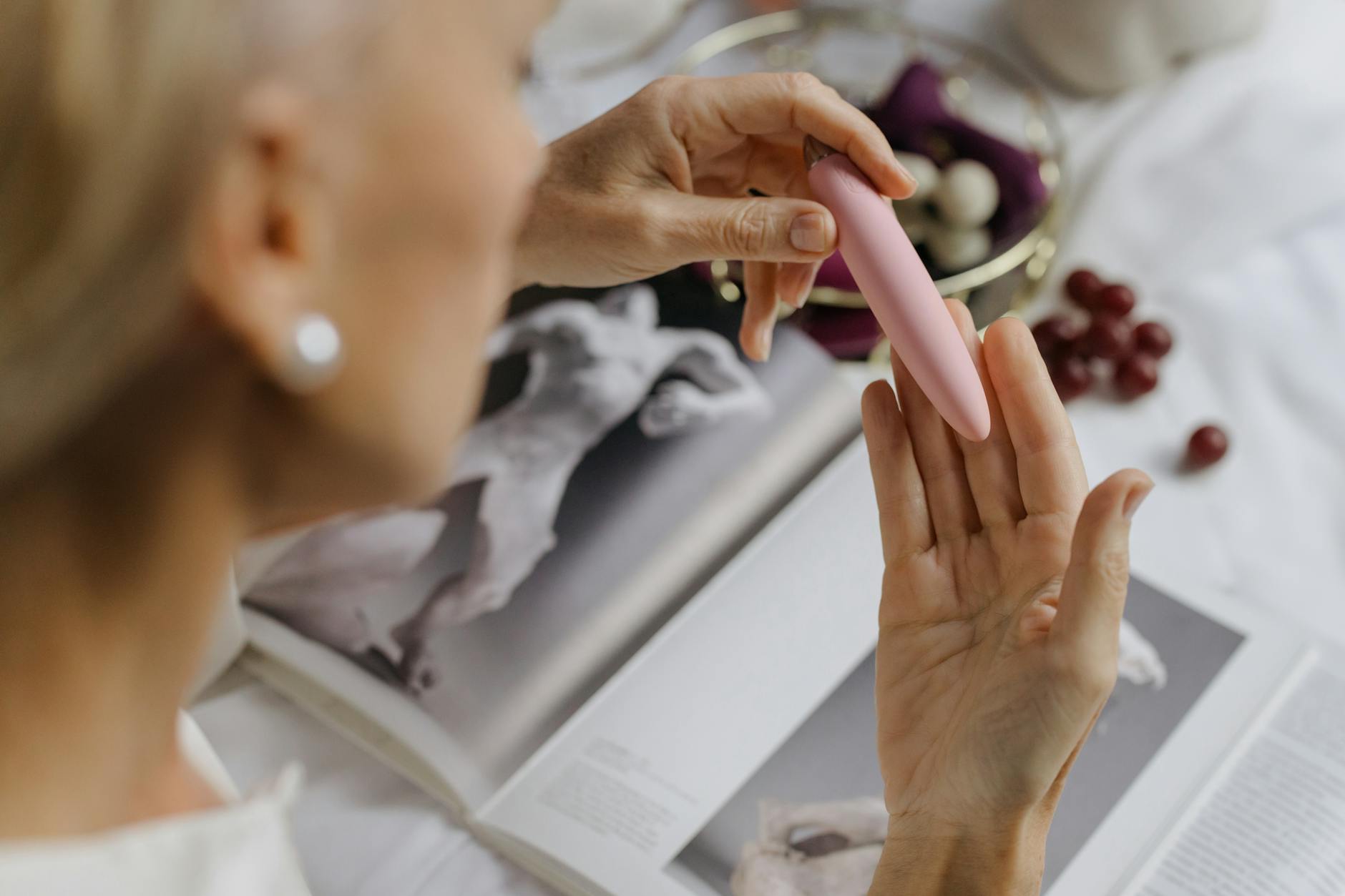
Photo by cottonbro studio on Pexels
How to bring your partner into the discovery
If you haven't used a lemon clitoral vibrator yet but you know you want to, consider inviting your partner in from the start. Let them help you choose. Show them the research on why lemon vibrators work better than traditional vibrators for sensitive bodies. Treat it like shared learning, not a solo project that they find out about later.
This doesn't mean they get a vote on whether you use it. Your pleasure is yours. But they get context, which means they don't have to construct a narrative in the absence of one.
People also ask
Will using a lemon vibrator make me unable to orgasm with my partner?
No. Your body isn't being rewired by the tool. You're learning what works for you. Many people find it easier to orgasm with a partner once they know what pathway gets them there. You can teach your partner what you learned. The vibrator becomes part of partnered sex, not a replacement for it. How to use a lemon vibrator when your partner finishes first explores this dynamic in detail.
Should I use a lemon vibrator during sex with my partner, or only solo?
Both, ideally, depending on what feels right. Some couples integrate it into every session. Some use it sometimes. Some people use it solo and then have partnered sex separately. There's no universal right answer. What matters is that you've agreed on it together and nobody feels resentful about the arrangement.
How do I tell my partner I want to use a lemon clitoral vibrator without them thinking I'm not attracted to them?
Frame it as "This is about understanding my body better," not "You're not enough." Invite them into the discovery. Show them it works. Don't apologize for it. And then when you feel disconnected from pleasure sensations, remember that your partner likely feels disconnected too if this conversation hasn't happened. Clarity helps.
Can we use a lemon vibrator together without it feeling clinical or awkward?
Completely. The awkwardness comes from secrecy, not from the tool itself. Once you've talked about it and integrated it, it becomes as natural as any other part of your sex life. The first time might feel weird. By the third time, it's just what you do.
What if my partner refuses to acknowledge the vibrator at all?
That's a bigger conversation about respect and whether you can be honest with each other. Your partner doesn't have to love the vibrator. But they do have to respect that your body works how it works. If they can't move past shame or insecurity around it, couples therapy can help. This isn't about the tool. It's about whether you can show up as your full self in the relationship.
How long does it usually take for partners to adjust to this shift?
Typically a few weeks if the conversation happens early and clearly. Most people's resistance softens once they realize it's not a rejection. The shift from discomfort to curiosity usually happens pretty fast once the shame lifts. If it's been months and your partner is still angry or withdrawn, that's a signal to get professional support.
The thing nobody says out loud
Your pleasure changing isn't a relationship problem. It's a relationship opportunity.
The couples who struggle aren't the ones where someone discovered a lemon vibrator. They're the ones who tried to hide it, or who used it as a weapon ("You're not giving me what I need"), or who never bothered to explain what shifted.
The couples who thrive are the ones who said: "I learned something about myself. I want you to know. I want us to explore this together."
That takes courage. But that's also where real intimacy lives.
If you're standing at the edge of this conversation with your partner, start small. Send them this article. Say, "This is what I've been feeling." See what happens. Most partners respond better to clarity than to the silence that comes before.
Your pleasure matters. Your partnership matters. Both things can be true at once. You just have to say so.
References
This article incorporates insights from modern relationship research on communication during sexual shifts, clinical observations on how external tools integrate into partnerships, and the Gottman Method's emphasis on emotional accessibility during vulnerable conversations. For deeper work on this topic, consider consulting a relationship specialist or sex therapist who can provide personalized guidance for your specific dynamic.