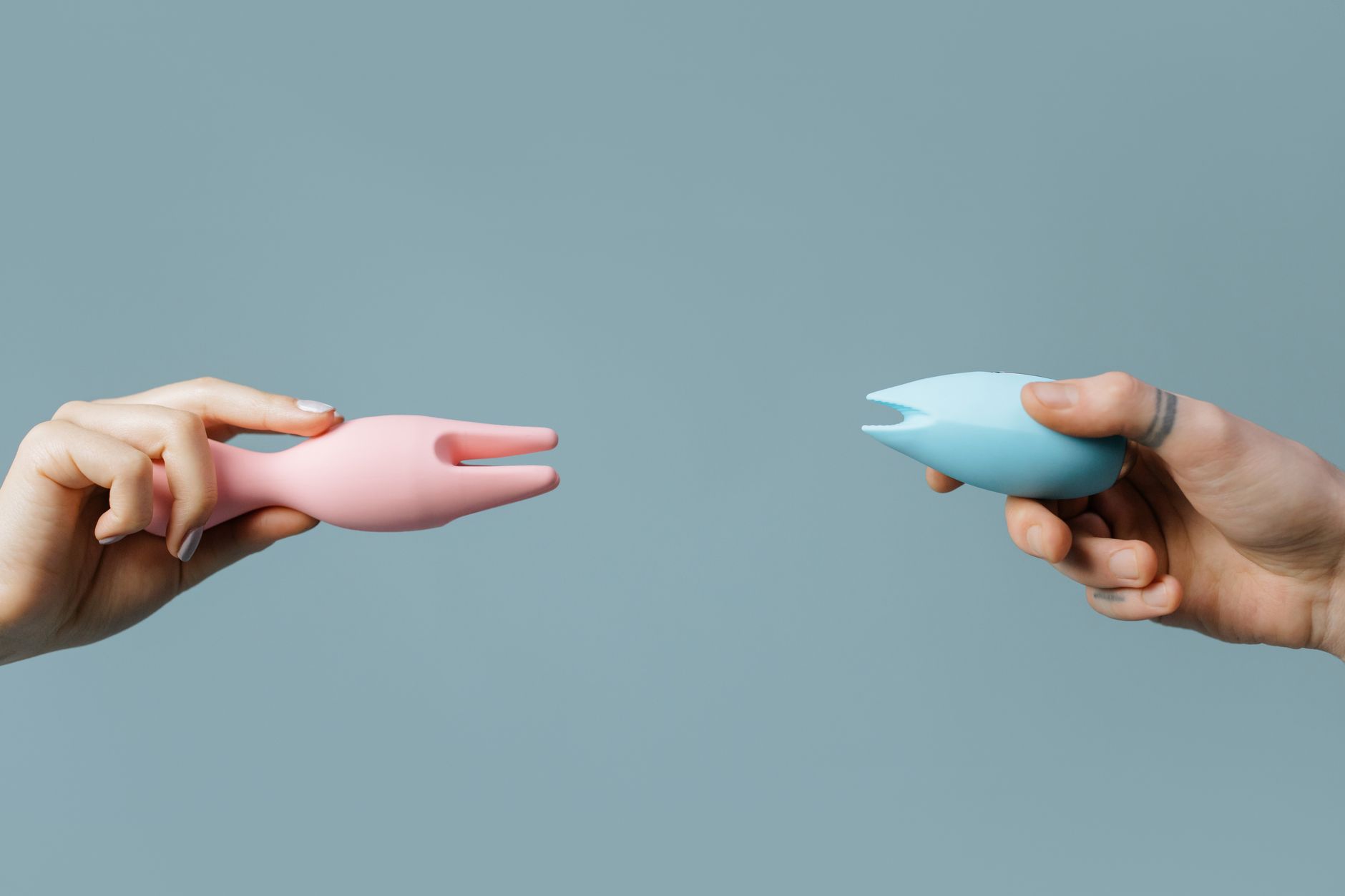
Let's talk about sensitive tissue
Honestly, sensitivity isn't a problem. It's information. Your clitoris has roughly 8,000 nerve endings concentrated in a space smaller than a pea, and some people's nerve density is naturally higher. Add thinner vaginal tissue from hormonal changes, genetics, or healing from trauma, and what works for most people can feel sharp, raw, or outright painful for you.
The good news: a lemon vibrator can absolutely work for sensitive bodies. It just requires a different strategy than the standard approach. I'm going to walk you through exactly how.
Why sensitivity happens and what it actually means
Tissue thinness and clitoral sensitivity often travel together, but they're separate variables. Thin tissue happens because of estrogen levels, hormonal IUD use, nursing, or simply how your body is built. Sensitivity, on the other hand, is about nerve reactivity. Some people have both. Some have one.
When tissue is thin, direct vibration can feel less like pleasure and more like impact. The vibrations transmit directly to delicate nerves without the cushion of thicker tissue to soften the sensation. It's the difference between tapping your arm and tapping your shin.
When the clitoris itself is highly sensitive, even gentle vibration can escalate quickly into overstimulation. Overstimulation isn't the same as being "too sensitive for toys." It means the sensation reaches a ceiling fast, and pushing past that ceiling creates numbness or pain instead of pleasure.
Both situations are fixable. The key is modulation: controlling intensity, pressure, placement, and duration.
Start lower than you think you need to
Most lemon clitoral vibrators come with a tiered intensity setting. A lemon sucker like the Lem has multiple patterns and power levels. If you have sensitive tissue or a reactive clitoris, start at the gentlest setting and pattern.
I mean genuinely gentle. Pattern 1, level 1. The kind of vibration that feels almost ambient at first. Your instinct will be to turn it up because "this isn't doing anything." Don't. Arousal changes sensation. What feels faint during the first 30 seconds of contact often feels entirely different after five minutes of consistent gentle stimulation.
Give yourself permission to sit with subtle sensation. This isn't about reaching climax fast. It's about figuring out what actually feels good in your particular body.
Use the suction head intelligently
Here's where lemon vibrators have a real advantage for sensitive people: they use suction and gentle pulsation rather than aggressive vibration. The Lem's design means stimulation is diffused across a wider area instead of concentrated on a single point. That matters wildly when your tissue is thin or your nerves are easily overstimulated.
Instead of placing the suction head directly over your clitoris, try positioning it slightly off to the side. Or use it on the hood area rather than the exposed glans. This gives you the same sensation at a fraction of the intensity. As arousal builds and your clitoris engorges, direct contact becomes less likely to feel abrasive.
You can also experiment with partial insertion. Don't seat it fully. Let just the outer ring make contact. You control how much of the suction reaches your clitoris by how far you insert it.
Lengthen your warm-up (yes, really)
When tissue is thin or sensitivity is high, a longer warm-up isn't optional. It's essential. Your clitoris engorges with blood during arousal, which plumps the tissue and makes stimulation feel less sharp. Thinner tissue becomes temporarily thicker. A reactive clitoris becomes less hair-trigger.
Spend 15 to 25 minutes on foreplay before you even introduce the vibrator. This might be partner touch, internal massage, mental arousal, or just time spent breathing and building anticipation. Your nervous system needs time to shift into a receptive state, especially if sensitivity has made past experiences uncomfortable.
Then, when you do use the lemon clitoral vibrator, start on the lowest setting while you're already partially aroused, not from a cold start.
Layer in lubrication generously
Even if your body produces adequate natural lubrication, add water-based lubricant anyway. Not for penetration, just for the surface. Lube reduces friction and smooths out the sensation. It's the difference between a light touch on bare skin and the same touch with silk between your fingers.
Reapply every few minutes. Lubrication evaporates, especially with consistent stimulation. Fresh lube keeps the sensation consistent and gentle.
Watch for the numbing plateau
One specific challenge with sensitive clitorises: overstimulation creates numbness. Your clitoris doesn't go numb because you've ruined it. It goes numb because the nerve is overwhelmed and temporarily shuts down its signal. If you chase the feeling by increasing intensity, you drive deeper into numbness.
The fix is counterintuitive. The moment you feel sensation flattening or the pleasure ceiling hitting, stop. Wait five to ten minutes. Back off to a gentler pattern or lower power level. Let your clitoris recover its sensitivity.
This isn't failure. This is you learning your own capacity and respecting it. Many people find their best orgasms come from multiple shorter sessions with breaks in between, not from one long push to climax.
How Lemon Vibrators Help When You Think You're Too Sensitive for Toys covers more strategies if standard approaches feel painful.
Protect yourself from pressure
Sensitive tissue can also mean your clitoris reacts badly to pressure. Vibration without pressure is ideal. This is another place where suction-based lemon adult toys win. They pull gently rather than press firmly. If you're using a partner's hand alongside the vibrator, ask them to keep pressure minimal. Light touch, no grinding.
If you're exploring solo, avoid the urge to press the vibrator harder against your body. Let the suction and vibration do the work. Your hand's job is to hold the toy steady, not to apply force.
Timing and touch patterns matter
Sensitive clitorises often prefer consistent, rhythmic patterns over variable ones. A lemon sucker's repeating pulse is gentler than a vibrator that constantly shifts intensity or pattern. Pick a single pattern and stick with it for several minutes. Your nervous system settles into rhythm, and the sensation becomes less jarring.
Also consider timing. Some people find that stimulation feels less irritating during specific parts of their cycle when hormonal balance shifts. If your clitoris feels more reactive mid-cycle, that's worth noting for future sessions.
Recovery is part of the process
After a session with your lemon vibrator, especially if you're still learning your sensitivity threshold, give yourself downtime. Don't go straight into penetration or partner touch. Let your clitoris rest for 30 minutes to an hour.
If you notice soreness or irritation the next day, you pushed too hard. That's not a failure. It's data. Dial back intensity and duration on your next session.
When to consider help from a specialist
If you have pain beyond normal sensitivity, or if numbness or overstimulation persists despite gentler approaches, it's worth talking to a pelvic floor physical therapist or a gynecologist familiar with sexual health. Sometimes what feels like a sensitivity issue is actually pelvic floor tension or a sign of localized inflammation that needs treatment.
A physical therapist can teach you relaxation techniques that reduce the tension holding your pelvic floor tight, which often reduces clitoral sensitivity simultaneously.
The long-term payoff
Learning to use a lemon clitoral vibrator with a sensitive clitoris and thin tissue isn't about suffering through discomfort. It's about finding your genuine pleasure threshold and respecting it. Many people find that consistency and gentleness actually deepen sensation over time. Your clitoris stops being reactive and becomes responsive. Huge difference.
People also ask
Can I use a lemon vibrator if my clitoris is extremely sensitive to touch?
Yes, with the right technique. Start at the lowest intensity, position the suction head slightly off-center rather than directly on your clitoris, and use plenty of water-based lubricant. Many people with high sensitivity find suction-based vibrators gentler than traditional vibrators because the sensation is diffused rather than concentrated. If even the lowest setting feels too intense, you might benefit from pelvic floor physical therapy to address underlying tension before trying a vibrator again.
How long does it take for sensitivity to settle when using a lemon clitoral vibrator?
Most people notice a shift within 5 to 15 minutes of consistent, gentle stimulation at the lowest intensity. Your clitoris engorges with blood during arousal, which changes how sensitive it is. However, if your clitoris is reacting intensely even with low intensity, you're likely in overstimulation territory. Stop, rest for 10 minutes, and try again with even lower intensity or gentler positioning.
Why does my clitoris go numb when I use a lemon vibrator even on the lowest setting?
Numbness usually means overstimulation, even at low intensity. Your nervous system is overwhelmed and shuts down its signal as a protective response. The solution is to use shorter sessions with longer breaks between them, back off to even gentler settings, or use the vibrator for shorter bursts (two to three minutes on, two to three minutes off) rather than continuous stimulation. If numbness happens even with minimal contact, you may need pelvic floor therapy to address underlying tension.
Is thin vaginal tissue permanent, or can it improve with lemon vibrator use?
Thin tissue from hormonal causes can improve with systemic hormone therapy or with localized vaginal estrogen cream prescribed by a doctor. Regular sexual activity, including with a lemon sucker, does improve blood flow to the area, which can help tissue health long-term. However, genetically thin tissue is just your anatomy. Using a vibrator won't thicken it permanently, but consistent, gentle stimulation can make sensation feel less sharp and improve overall pelvic health.
What's the difference between clitoral sensitivity and being overstimulated?
Sensitivity is your baseline reactivity. Your clitoris is naturally responsive to touch. Overstimulation is what happens when you push past your capacity. Sensitivity + too much intensity or too long duration equals overstimulation. The fix for sensitivity is gentler, shorter sessions. The fix for overstimulation is stopping, resting, and approaching with lower intensity next time. If you're constantly hitting overstimulation, you may need to address underlying pelvic floor tension.
Can I use a lemon vibrator daily if I have a sensitive clitoris?
Yes, but dial in your approach first. Daily use is fine if you're not hitting overstimulation or soreness afterward. If you're experiencing numbness, irritation, or pain the next day, you're using it too aggressively or too long. Scale back to every other day, shorter sessions, or lower intensity until your clitoris stops showing signs of distress. Daily use at genuinely gentle intensity is actually gentler on sensitive tissue than less frequent, more intense sessions.
Final thought
Sensitivity isn't a flaw in your body. It's a characteristic. And learning to work with it, rather than against it, is where real pleasure happens. A lemon vibrator gives you control that most other toys don't. Use it.