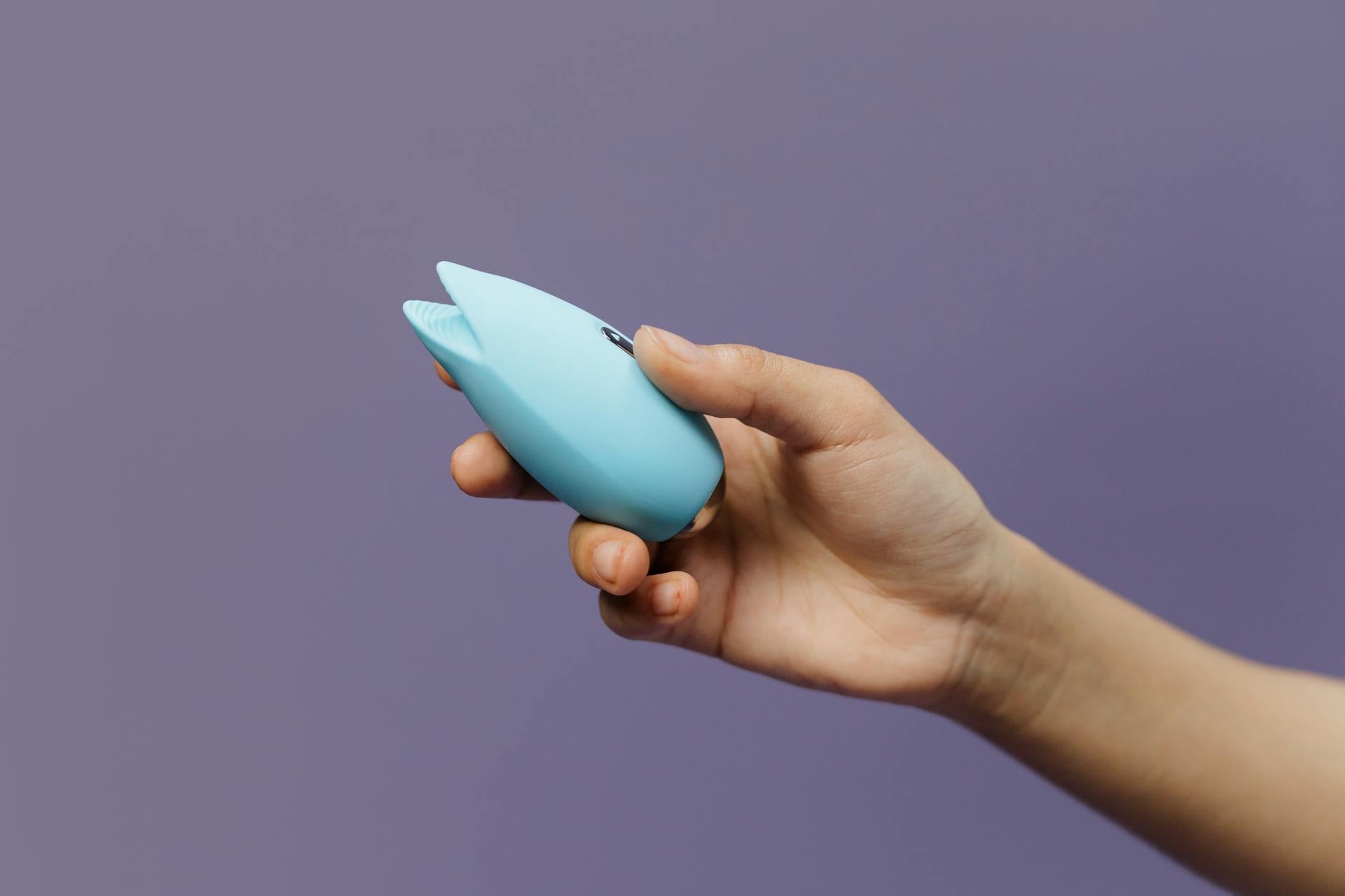
When you bring a lemon vibrator into partnered sex, everything changes
It's not your imagination. A lemon clitoral vibrator feels wildly different when you're alone versus when your partner is in the room, or worse, watching, or best, actively involved. The device is identical. Your body is the same. But the experience? Completely transformed.
This isn't failure. This is neurology, attachment, and permission colliding. Understanding what's actually happening makes the difference between thinking something's wrong with you and knowing exactly how to use a lemon vibrator (or any clitoral toy) in partnership.
The nervous system shift is real and immediate
When you're solo, your nervous system gets to relax into parasympathetic mode. No audience, no judgment, no performance metrics. You can wander your attention. You can take 40 minutes if you want. You can stop mid-orgasm and make a sandwich.
When a partner enters the room, your sympathetic nervous system activates. That's not bad. It's alert. It's engaged. But alert and aroused are not the same thing. Most people need a few minutes for their parasympathetic system to reassert itself enough to actually come, especially if there's any lingering self-consciousness about using a vibrator.
The lemon vibrator is doing the same thing it always does. Your nervous system is doing something different. That's why the sensation feels muted, or intense, or disorienting. You're not broken. You're just divided between pleasure and presence.
What happens when visibility triggers self-doubt
Let's be honest about the mental layer. If you grew up with messaging that using toys makes you "needy" or "broken" or "insufficient as a partner," bringing a lemon clitoral vibrator into shared sex feels like admitting something's wrong. Even if you logically know that's nonsense, your nervous system doesn't read think-pieces.
You're holding the vibrator. A part of your brain is thinking, "Is my partner judging me right now?" Another part is tracking whether the sensation is "performing" correctly. Another part is managing whether you look attractive while using a vibrator (spoiler: you almost certainly do, and your partner is likely very into it). And that part of you that actually wants to feel pleasure? It's getting about 40% of the bandwidth.
A lemon sucker or any clitoral vibrator can't bypass this. But awareness helps. If you notice self-consciousness hijacking the experience, that's not a reason to stop. That's a reason to pause and say something: "I'm a little in my head." Most partners respond by stepping back or helping you refocus. Permission becomes mutual.
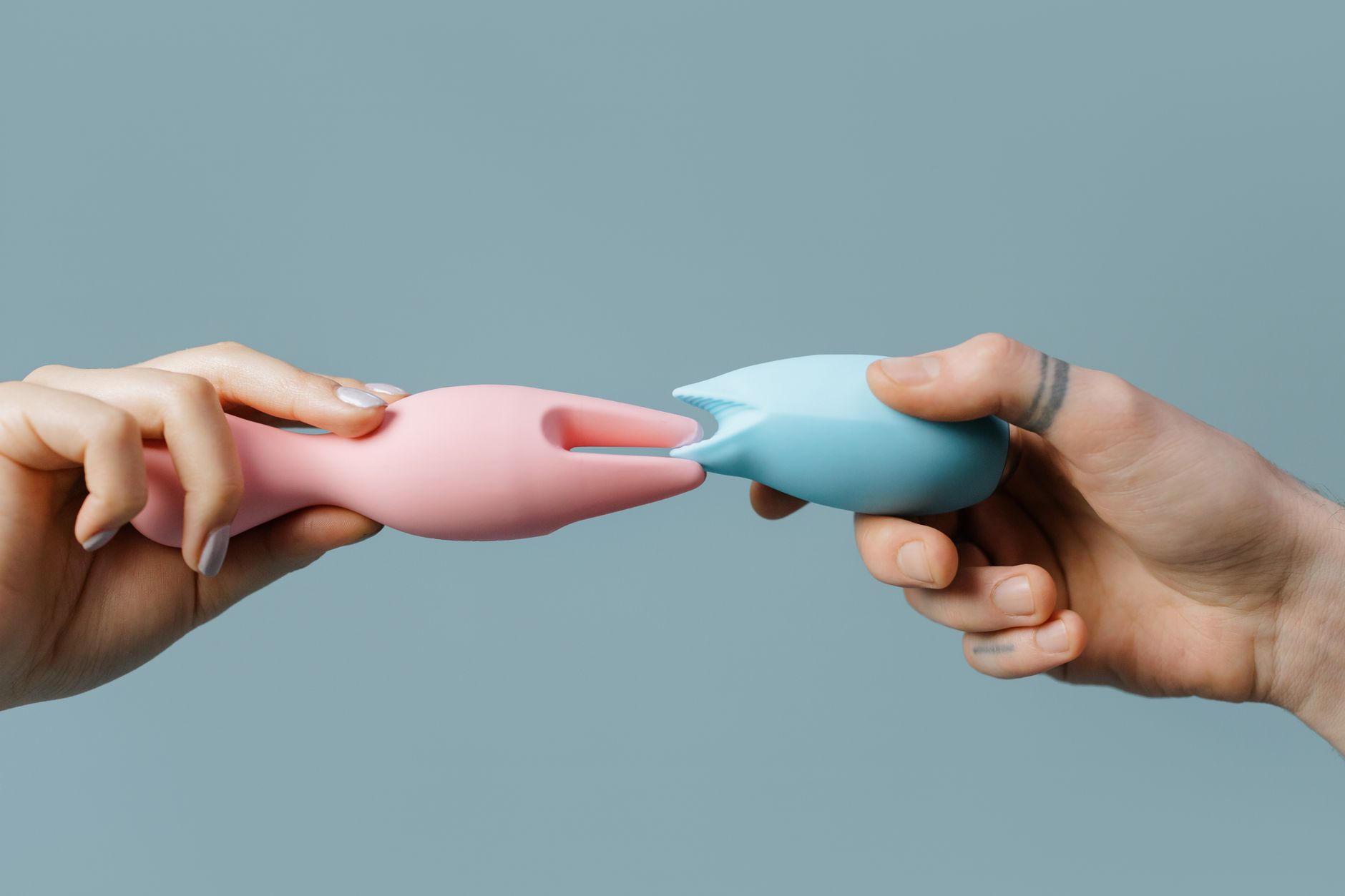
Photo by cottonbro studio on Pexels
The arousal timing gap that nobody talks about
Here's something strange that happens with lemon vibrators during partnered sex. The toy is stimulating you consistently, but you're not responding as fast as you would alone. Why? Because partnered arousal requires a different cognitive load than solo arousal.
When you're alone, arousal is linear. Stimulation accumulates, your body responds, you come. Solo pleasure is almost mechanical, and that's fine. When a partner is involved, your arousal has to coexist with connection, communication, and awareness of their pleasure too. Your brain is doing more.
This is why the first 5-10 minutes of partnered sex with a lemon vibrator often feel slower or less responsive than you expect. You're not less sensitive. You're managing more variables. The device isn't the problem. The expectation that it should work identically in two completely different contexts is the problem.
One fix: stop comparing. Start describing. Tell your partner what you're noticing in real time. "I need a couple of minutes to settle in" is not less sexy than instant fireworks. It's honest.
When your partner's touch and the toy compete
Something weird happens when a lemon clitoral vibrator is involved and a partner is also trying to stimulate you manually or with their mouth. The sensations can cancel each other out instead of building. You get competing signals, divided attention, and a vague sense that something's off.
This is because your clitoris has a finite attention span. Suction-based stimulation (which is what a lem vibrator offers) is specific and focused. Manual or oral stimulation is broader and more variable. When both are happening at once, your nerve endings are getting conflicting input, and your brain struggles to integrate them into a coherent sensation.
The workaround is simple: zones. One partner uses the vibrator. The other focuses elsewhere. Or the lemon clitoral vibrator is solo while your partner participates in other ways. Or you hand the vibrator to your partner and let them control the timing while you focus on connection. Different configurations, same principle: don't stack stimulation sources unless you've actually practiced and both of you know it works for your bodies.
Permission and pacing shift everything
Here's what I notice in my practice with couples who use lemon sexual toys together. The difference between awkward and incredible is almost always permission. Not just verbal permission ("you can use a vibrator") but genuine, enthusiastic permission that your partner demonstrates through their response.
If your partner treats the vibrator like it's a substitute for them, pleasure gets weird fast. You feel guilty. You feel like you're choosing the toy over connection. That feeling travels down into your body, and suddenly the lemon vibrator that felt amazing five minutes ago now feels like you're doing something wrong.
But if your partner approaches the vibrator as a tool you both want to use, as part of what makes sex better for you both, the entire context shifts. You're not replacing connection. You're including something that enhances it. That psychological permission ripples into your nervous system, and suddenly the sensation is completely different.
Building stamina as a couple with a lemon vibrator
Many couples use lemon clitoral vibrators because one partner's arousal takes longer to build, or orgasm is harder to reach, or sensation has diminished over time. The vibrator solves the mechanical problem but not always the relationship one. If one partner is using a vibrator because the other's touch isn't enough anymore, that can feel like a failure of intimacy instead of an expansion of it.
The actual fix is reframing. Your partner's touch doesn't become irrelevant. It becomes part of the foreplay, the warmth, the connection. The lemon sucker becomes the thing that reliably gets you to orgasm. Both matter. Both are necessary. This is not scarcity of pleasure. It's abundance.
Many couples I work with find that using a vibrator together actually deepens intimacy because it removes the pressure from one person to be the sole source of their partner's pleasure. Pressure kills arousal. Collaboration builds it.
The curiosity that changes everything
Honestly, the couples who have the best experience with lemon vibrators during sex are the ones who approach it with curiosity instead of anxiety. "Let's try this and see what happens" lands so differently than "I hope this doesn't hurt your feelings."
If you're nervous about how your partner will react to you using a clitoral vibrator, start the conversation before it's happening. Not in the moment when you're both undressed and vulnerable. Pick a regular conversation and say something like, "I've been thinking about trying a lemon vibrator during sex. I'd love to try it with you." That gives your partner time to process, ask questions, and get curious instead of surprised.
If your partner is the one suggesting it, and you feel hesitant, don't agree right away. Ask questions. "What made you think of this?" "How do you imagine it working?" "What are you hoping it might help with?" Most of the time, hesitation melts when you actually understand your partner's reasoning.
FAQ
Will using a lemon vibrator make my partner feel replaced or inadequate?
Not unless you frame it that way. If you introduce a lemon clitoral vibrator as "I need this because you're not enough," that will land poorly. But if you frame it as "I want to try this together because it might feel incredible," it's usually received as invitation, not criticism. Most partners are relieved to learn that a toy can help their partner reach orgasm, especially if it's been difficult. It's less pressure on them, not more.
Why does using a lemon sucker feel more intense when my partner is involved?
Because of psychological arousal. When your partner is present and engaged, your brain is releasing more dopamine and oxytocin. That changes how your nervous system interprets sensation. The vibrator isn't different. Your neurochemistry is. Intensity often goes up, not down, once you get past the initial self-consciousness.
Should we use a lemon vibrator during foreplay or at the end of sex?
Depends on your arousal patterns and what you're trying to accomplish. If a lemon clitoral vibrator helps you reach orgasm, it might make sense late in partnered sex when you're both already aroused. If it's helping you build sensation over time, it might appear earlier. There's no rule. The only guideline is what feels good and what serves both of your pleasure. Experiment and notice what works.
How do I ask my partner to use the lemon vibrator on me during sex?
Direct is better than hinting. "I'd love it if you held the vibrator while I..." or "Can we try this together?" Specificity removes ambiguity. Most partners want to know what you want because it makes them better at providing it. You're not asking them to read your mind. You're giving them useful information.
Does using a lemon vibrator mean something's wrong with our sex life?
No. It usually means you want to feel more, come more reliably, or explore together. Those are signs of engagement, not failure. The couples who integrate toys into their sex life are usually the ones already talking about pleasure, experimenting, and prioritizing connection. That's the opposite of a sign of trouble.
Can we use a lemon vibrator every time we have sex, or will I get used to it?
You might. But desensitization usually happens over months, not weeks, and it's often linked to stress, medication, or hormonal changes rather than the toy itself. Rotating between different stimulation styles (manual, toy, combination) can help. And honestly, if you need a lemon clitoral vibrator to come reliably, that's not a bad thing. It's useful information about your body. Use it.
The real shift is permission, not pressure
What makes a lemon vibrator feel different in partnership is never just the mechanics. It's what the vibrator represents. Am I allowed to prioritize my own pleasure? Is my partner celebrating that or resenting it? Can we be vulnerable enough to say what we actually want?
The lemon clitoral vibrator is just the container for these bigger questions. If you're using it and it feels wrong, the vibrator isn't the problem. The permission structure is. If you're using it and it feels incredible, permission is already there. Work on that first, and the toy becomes a natural next step instead of a source of friction.
Your pleasure matters. Your partner's willingness to support that matters more. Start there.
Resources
For more on navigating pleasure in partnership, read our guide on how to use a lemon vibrator when your partner's libido mismatches yours. If you're dealing with deeper communication barriers around intimacy, how Lemon Vibrators Help Rebuild Intimacy After Sexual Aversion covers that terrain. And if you're still figuring out which lemon sexual toy might work best for partnered play, How to Choose Between Lemon Vibrator Designs for Your Body Type walks through the options.
If you have questions about integrating clitoral vibrators into your relationship or want personalized guidance, reach out to our team. We're here to help.